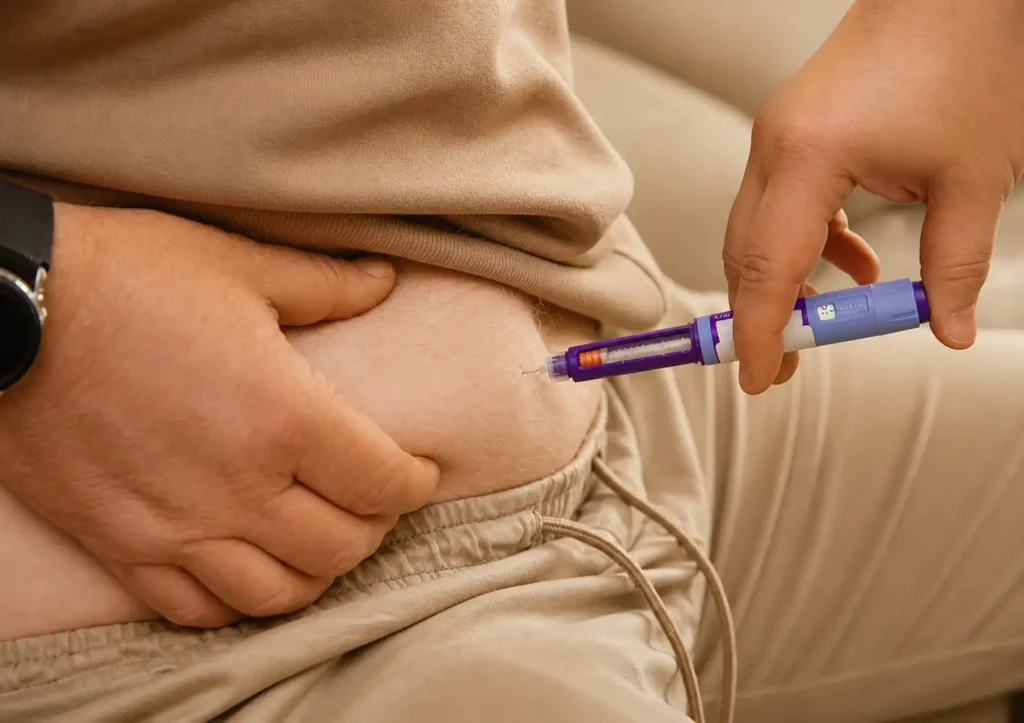
Yes, you can get weight loss medication without having diabetes. In the UK, several prescription treatments are approved for weight management. These are for people with obesity or those who are overweight. A diabetes diagnosis is not needed.
Medications like Wegovy, Mounjaro, and Orlistat are prescribed to non-diabetic patients. To qualify, they must meet certain BMI and health criteria. Diabetes is not a prerequisite for treatment.
Keep reading to learn about available medications. You’ll find out who qualifies, how doctors check eligibility, and what to expect if you don’t quite meet the requirements.
Who Qualifies for Weight Loss Medication?

In the UK, you can get prescription weight loss medication if you meet certain criteria. These include your BMI, any health issues related to your weight, and a full clinical assessment. Having diabetes is not required.
Eligibility starts at a BMI of 30, or 27 if you also have a weight-related health condition. Some NHS pathways use lower thresholds for people from South Asian, Chinese, other Asian, Middle Eastern, Black African, and African-Caribbean backgrounds.
This is because health risks increase at lower body weights in these groups. Your pharmacist will confirm which criteria apply to the route you are using.
To qualify, patients must have tried a supervised diet, made behavior changes, and exercised more but haven’t lost enough weight. There are also age limits, and they differ between treatments; one is available to adults up to 84, the other up to 74.
Having a weight-related condition alongside a lower BMI can also make a patient eligible.
Common qualifying conditions include:
- High blood pressure
- High cholesterol
- Obstructive sleep apnea
- Cardiovascular disease
- Diet-controlled type 2 diabetes
A prescriber will review your medical history. They do this to find any specific contraindications before suggesting treatment. A full clinical assessment is required before any medication is discussed.
Which Weight Loss Medications Can Be Prescribed Without Diabetes?
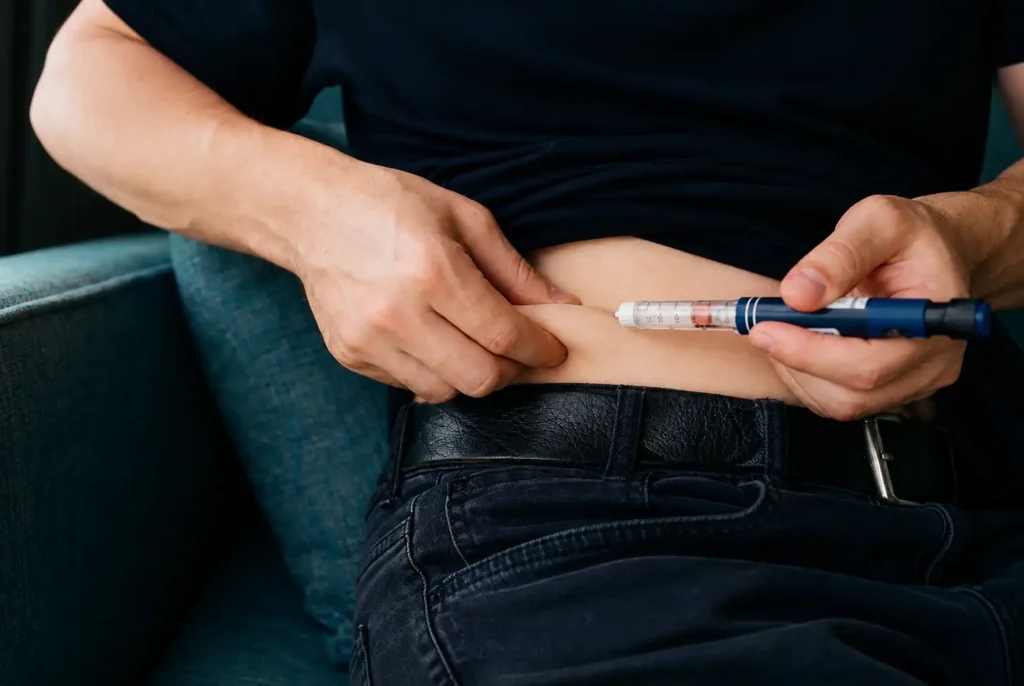
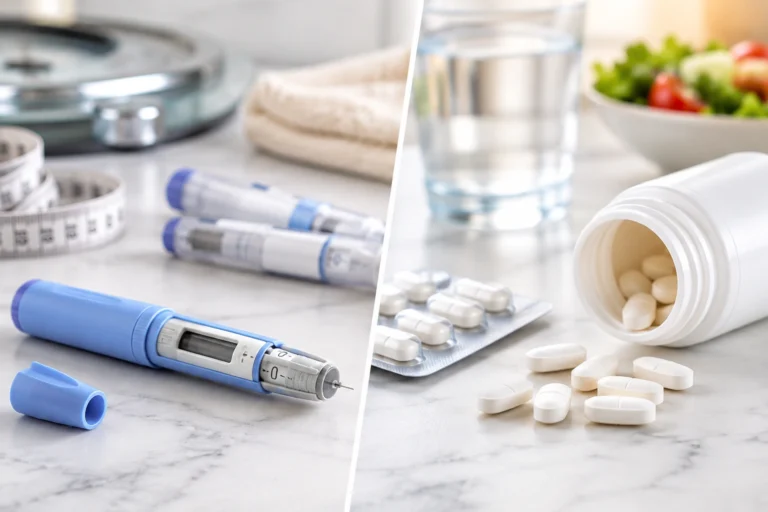
Several prescription weight loss treatments are available in the UK to non-diabetic patients. The table below gives a quick overview, followed by a brief explanation of each.
Wegovy (Semaglutide)
Wegovy has semaglutide. It’s approved in the UK for weight management, not for diabetes treatment. It’s a once-a-week injection. It mimics the GLP-1 hormone, which helps reduce appetite and slows gastric emptying. Clinical trials with non-diabetic participants found an average body weight loss of about 15% over 68 weeks. A higher dose of 7.2 mg was approved in January 2026. Participants who followed the treatment program, including diet and exercise, lost up to 20.7% of their weight.
Mounjaro (Tirzepatide)
Mounjaro is the UK brand name for tirzepatide (sold as Zepbound in the United States). It targets both GLP-1 and GIP receptors, making it a dual-action treatment. The SURMOUNT-1 trial showed that participants lost about 21% of their body weight on the highest dose over 72 weeks. Those on the lower 5 mg maintenance dose lost around 15%. This included both diabetic and non-diabetic participants.
Saxenda (Liraglutide)
Saxenda contains liraglutide and was the first GLP-1 injection for weight management in the UK. It is given as a daily injection rather than weekly. Average weight loss with this option is about 8% over 56 weeks. The average weight loss is lower than that reported for Mounjaro or Wegovy. However, it’s still a licensed choice for patients who can’t use the weekly injectables.
Mysimba (Naltrexone and Bupropion)
Mysimba is the UK version of Contrave. Both contain the same active ingredients: naltrexone and bupropion. Mysimba targets the brain’s reward and appetite pathways. This helps reduce food cravings instead of blocking fat absorption. It comes as an oral tablet and is available in the UK only by private prescription. NICE has not recommended it for NHS use due to cost-effectiveness issues. Average weight loss in clinical studies is around 8.1% over 56 weeks.
Orlistat
Orlistat is one of the most widely available weight-loss medicines in the UK. It works by blocking approximately a third of dietary fat from being absorbed in the gut. You can get it through the NHS, with a private prescription, or over the counter as the 60 mg dose called Alli. It gives smaller results than injectable options. However, it has a solid history and is cheaper.
Why Are Some Diabetes Drugs Used for Weight Loss?
Many people associate certain medications to diabetes. These drugs were initially developed to manage blood sugar in those with type 2 diabetes. During clinical trials, researchers observed significant weight loss as a consistent secondary effect. That finding changed the direction of the research programs entirely.
Ozempic (semaglutide) and Mounjaro (tirzepatide) are approved in the UK to manage type 2 diabetes. When tested at higher doses in weight loss trials, the same active ingredients showed impressive results. This evidence was strong enough to support separate licenses for weight management.
Ozempic and Wegovy both have semaglutide as their active ingredient. However, they come in different doses and are approved for different uses. Mounjaro and its US name, Zepbound, work the same way. They have different brands based on the country and how they are used.
In the UK, Ozempic is not licensed for weight loss. Using it for that purpose would constitute off-label prescribing. Wegovy, at a dose of 2.4 mg, is approved for weight management.
It’s for eligible patients who are obese or overweight. A responsible prescriber will generally consider the licensed treatment for the intended use. They may prescribe a diabetes drug off-label.
How Doctors Decide Whether Weight Loss Medication Is Appropriate

A prescriber does not simply look at your BMI and issue a prescription. The assessment covers your full medical history, dietary habits, previous attempts at weight loss, current medications, and screening for specific contraindications.
These are absolute exclusions, not judgment calls.
You cannot receive injectable treatments if you:
- Are pregnant, trying to conceive, or breastfeeding.
- Have a history of an eating disorder.
- Have a personal or family history of medullary thyroid cancer or MEN2.
- Have had pancreatitis.
- Have type 1 diabetes.
- Have severe kidney or liver disease.
- Have Crohn’s disease, uncontrolled inflammatory bowel disease, or significant gastroparesis.
They aren’t suitable if weight gain is due to another condition or medication. Also, don’t use them if you’re already on another weight loss drug.
For Mounjaro, use a non-oral or barrier contraceptive for 4 weeks after starting or increasing the dose. Stop Wegovy at least 2 months before pregnancy. Inform healthcare providers before general anesthesia to reduce pulmonary aspiration risk.
Can You Get Weight Loss Medication If You Are Not Obese?
Eligibility is not a simple yes or no; it varies by BMI range and medical history. Below is a general guide based on current UK prescribing criteria.
BMI Under 27
Prescription weight loss medication is generally not recommended at this BMI range. The clinical evidence for licensed treatments focuses on people with a BMI of 27 or higher. The risk-benefit profile usually doesn’t support prescriptions below this level. A GP or pharmacist would suggest starting with structured lifestyle changes.
BMI 27 to 29.9
Treatment may be possible in this range if a qualifying weight-related health condition is present. Conditions such as high blood pressure, high cholesterol, type 2 diabetes, sleep apnea, or heart disease can affect eligibility. In these cases, a prescriber may consider treatment after a full clinical review.
BMI 30 and Above
No additional health condition is needed at this BMI. This is the point where most licensed weight loss medications can be prescribed, with or without another health issue. At a BMI of 35 and above, clinical evidence supports GLP-1 injections as an appropriate option. NHS access becomes available through specialist weight management services at higher BMI ranges.
Benefits of Prescription Weight Loss Medication
The clinical data behind the newer GLP-1 injections is strong. In the SURMOUNT-1 trial, participants on Mounjaro 15 mg lost an average of 21% of their body weight over 72 weeks. At the lower maintenance dose of 5 mg, average loss was around 15%.
Beyond the scales, the benefits are worthwhile for long-term health. Losing 5% to 10% of body weight can help. It lowers blood pressure, improves cholesterol, and reduces the risk of type 2 diabetes.
It also eases pressure on weight-bearing joints. In people with heart disease and obesity, semaglutide can lower the risk of major heart events by about 20%. That finding applies to that specific group and is not a general benefit of treatment.
These are not marginal effects. For patients who can’t lose enough weight with diet and exercise, prescription medication can make a big difference.
Potential Side Effects
GLP-1 injectable treatments (Wegovy, Mounjaro, Saxenda)
The most common side effects are gastrointestinal, particularly during the dose escalation phase. Nausea is the most frequently reported and affects a significant proportion of new users. Other common effects include diarrhea, vomiting, stomach pain, and constipation. These usually improve as the body gets used to the medication and the dose goes up slowly. In a small number of patients, the nausea is severe enough to need stopping treatment.
Orlistat:
Side effects are almost entirely gastrointestinal and directly linked to dietary fat intake. Oily or loose stools, flatulence, and urgency to use the toilet are common, particularly after a high-fat meal. Keeping dietary fat below recommended thresholds reduces these effects. Orlistat also slightly reduces the absorption of fat-soluble vitamins (A, D, E, and K).
Mysimba:
GLP-1 treatments have side effects like nausea, headaches, dizziness, and insomnia. Some may also feel agitated or have mood changes. The EMA’s 2025 review found benefits outweigh risks, but long-term safety is uncertain. Treatment ends if you don’t lose 5% of body weight in 16 weeks, with annual reviews. A cardiovascular outcomes trial will report in 2028.
What If You Do Not Qualify?

Not everyone will meet the clinical criteria for prescription weight loss medication, and that is not the end of the conversation. A structured diet and more exercise are key for weight management. When done right, many people see real results.
Working with a dietitian or a structured NHS weight management program gives you a framework rather than a loose intention. GP referrals are available in England for NHS-funded programs.
At Orrell Park Pharmacy, our pharmacist can help you find the right starting point. They’ll guide you on what options fit your needs if medication isn’t suitable right now.
If your BMI or health changes, we can check if you’re still eligible for prescription treatment. It is worth having the conversation with a healthcare provider rather than assuming that nothing is available.
Frequently Asked Questions
Can I use Ozempic for weight loss if I do not have diabetes?
In the UK, Ozempic is only licensed for type 2 diabetes. Wegovy has the same active ingredient but at a higher dose. It is the right choice for weight loss in patients who are not diabetic.
Will a UK GP prescribe weight loss medication to someone who does not have diabetes?
This depends on the specific medication and local commissioning. Under the 2026/27 GP contract, Mounjaro will roll out in phases. Access is usually limited to those with a BMI of 35 or higher. They must also have at least four weight-related health issues. Availability varies widely among local health boards. Wegovy usually requires a referral to a specialist weight management service.
Do weight loss medications stop working over time if you are not diabetic?
No. The mechanism is the same regardless of diabetes status. Some patients experience slower progress as the dose reaches the maintenance level, but this reflects a plateau, not a loss of drug effect.
Can weight loss medications cause low blood sugar in people without diabetes?
GLP-1 medicines carry a very low risk of hypoglycemia in non-diabetic patients when used alone. Combining this with other blood sugar-lowering medications raises the risk a lot. That’s why a complete medication review is essential during any prescribing assessment.
Is private prescription the only route if you do not qualify for NHS weight loss medication?
Patients who qualify can receive private prescriptions for medications like Mounjaro, Wegovy, Mysimba, and Orlistat. This is for those who don’t qualify for NHS treatment. A full clinical assessment by a prescriber is required.
Conclusion
You do not need a diabetes diagnosis to access prescription weight loss medication in the UK. The criteria consider BMI, health conditions, and personal medical history. Diabetes is not required. Wegovy, Mounjaro, Saxenda, Mysimba, and Orlistat may be given to non-diabetic patients if they qualify.
The clinical results for the new GLP-1 treatments are some of the best seen for any weight management medication. They are not, however, appropriate for everyone. Eligibility depends on health factors. Some patients may benefit more from structured lifestyle support first.
Talk to a pharmacist or GP before starting any weight loss medication. They can look at your health and suggest a safe and realistic treatment plan for you. Our team at Orrell Park Pharmacy is here to talk about your options. We can also perform a clinical assessment. Book a consultation at our weight management service or call 0151 525 1003.