Your ears feel blocked. Sounds are muffled. Maybe you’ve tried cotton buds and made things worse. Before you reach for anything else, it’s worth understanding what earwax actually is and why your body makes it.
What Is Ear Wax?
Earwax (cerumen) is a natural substance your ear canal produces to protect itself. Most of the time, it clears on its own.
When too much builds up, it can cause muffled hearing, discomfort, and ringing. Safe removal options include ear drops, irrigation, and microsuction.
Why Do We Have It?
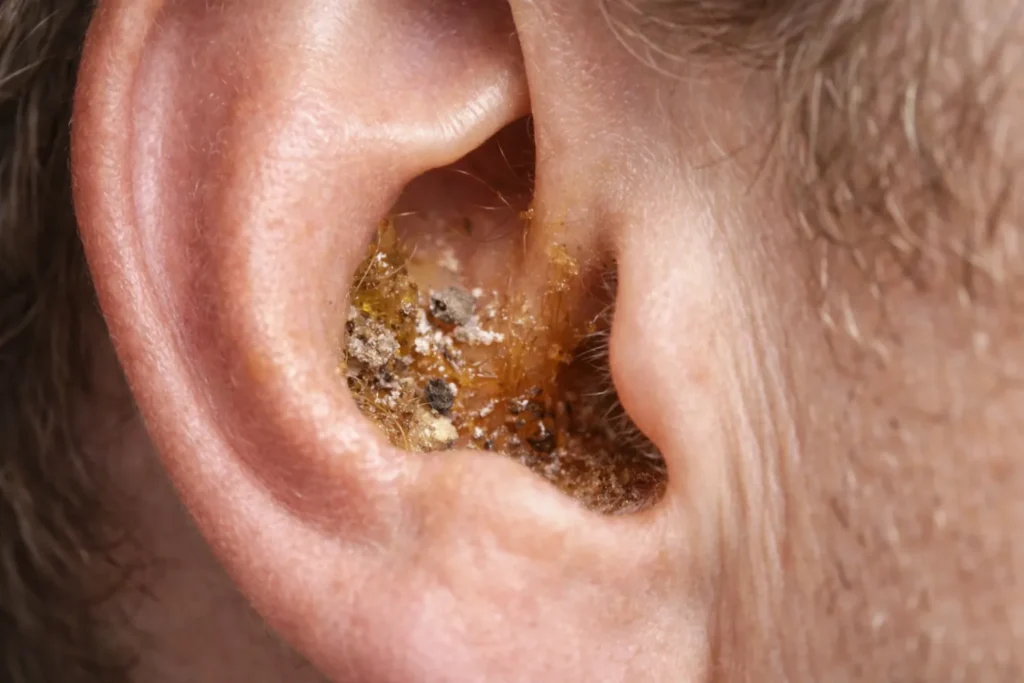
Earwax isn’t a sign of dirty ears. It’s one of the body’s more useful protective systems. Without it, your ears would be far more vulnerable to infection, irritation, and damage.
It acts as a physical barrier
The ear canal is a direct opening into a sensitive part of your body. Wax traps dust, dirt, insects, and debris before they reach the eardrum, a sticky filter catching anything that shouldn’t be there.
It keeps the canal moisturised
The skin inside is thin and delicate. Earwax stops it from drying out or cracking. Without it, the canal becomes dry, flaky, and itchy.
It fights bacteria and fungi
According to the NHS, Earwax has a slightly acidic pH, which makes it actively hostile to certain microbes. Research has shown that cerumen inhibits the growth of several bacterial strains, including Staphylococcus aureus. It’s one reason ear infections aren’t more common than they are, given how exposed the canal is.
The ear cleans itself
This one surprises most people. Tiny hair-like structures called cilia, combined with natural jaw movement when you talk and chew, slowly push old wax out of the canal. By the time it reaches the outer ear, it’s ready to fall away on its own. No cotton buds needed.
What If You Had No Ear Wax?
Without it, the ear canal would be unprotected. Bacteria and fungi would have a much easier route to cause infection. Dust and debris would reach the eardrum more freely. The skin inside would dry out and crack.
People who produce very little wax, sometimes due to age or certain skin conditions, often experience recurring ear infections and persistent itchiness. Earwax is genuinely useful. The aim isn’t to remove all of it. It’s to manage it when there’s too much.
Symptoms of Impacted EarWax
When wax builds up enough to block the ear canal, it’s called impaction. Common signs include:
- A feeling of fullness or pressure in the ear
- Muffled or reduced hearing in one or both ears
- Ringing, buzzing, or humming sounds (tinnitus)
- Earache or mild discomfort
- Itchiness inside the ear
- Occasionally, dizziness
Symptoms often appear suddenly after water gets into the ear after swimming or a shower, because water causes the wax to swell.
When Does EarWax Become a Problem?
Only when there’s too much of it, or it’s in the wrong place.
A small amount of wax in the outer ear canal is completely normal. Problems start when the build-up is enough to partially or fully block the canal. If your hearing is noticeably worse in one ear, if there’s persistent ringing, or if your ear just feels blocked, get it checked.
And don’t try to clear it yourself with cotton buds, hairpins, or ear candles. Cotton buds push wax deeper. Ear candles carry a real risk of burns and blockage. Neither removes wax effectively.
EarWax Removal Methods Compared
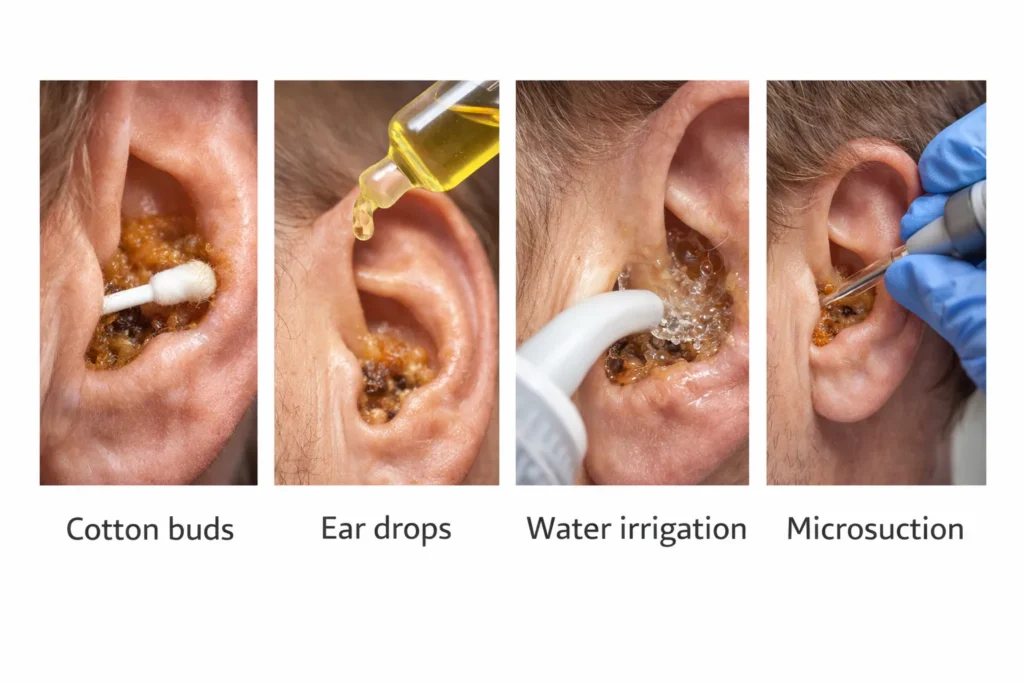
People try many methods to remove earwax, but not all methods are equal.
Cotton buds (not recommended)
They push wax further in rather than removing it. A leading cause of impaction and, in some cases, eardrum perforation. Most ENT specialists advise against them entirely.
Ear drops
Softening drops like olive oil, sodium bicarbonate, or over-the-counter preparations can loosen mild build-up over a few days. They work well for soft, recent wax. They won’t shift hard, impacted wax on their own, but they’re a useful first step before irrigation.
Water irrigation (ear syringing)
Warm water is flushed gently into the ear canal to dislodge and wash out softened wax. Effective for many patients, but not suitable for anyone with a perforated eardrum, a history of ear surgery, or an active ear infection. Can cause temporary dizziness.
Microsuction (the gold standard)
A fine, low-pressure suction device removes wax directly from the ear canal under magnification. No water involved. Suitable for most patients, including those with perforated eardrums or grommets.
Fast, safe, and the method preferred by most audiologists and ENT specialists. Orrell Park Pharmacy offers professional microsuction ear wax removal.
How Often Should You Have Earwax Removed?
There’s no single answer. Some people never need professional removal. Others need it every six to twelve months.
If you wear hearing aids, use earbuds daily, or have narrow ear canals, wax tends to build up more regularly. If symptoms keep returning every few months, it’s better to book a routine check than wait for a full blockage.
A few drops of olive oil once or twice a week can help slow the build-up for people who are prone to it.
Frequently Asked Questions
Why do I have more wax in one ear?
Quite common. It can come down to the shape of your ear canal, sleeping on one side more than the other, or simply how that particular gland produces wax. It doesn’t mean something is wrong, but if it’s causing symptoms, get it checked.
Is it bad to have no earwax?
Very little wax can leave the canal vulnerable to dryness, irritation, and infection. A small amount is healthy and normal. If you’re producing very little and having recurring ear problems, mention it to a pharmacist or GP.
Is a lot of earwax good or bad?
It depends. A reasonable amount is healthy and protective. Enough to block the canal causes symptoms and needs managing. What counts as “too much” varies from person to person.
Is earwax a sign of poor hygiene?
No. Earwax production is a biological process that happens regardless of how often you wash. Over-cleaning with cotton buds is actually a more common cause of ear problems than wax itself.
How long does earwax removal take?
A microsuction appointment at Orrell Park Pharmacy typically takes 15 to 20 minutes. If wax is very hard or impacted, we may recommend softening drops for a few days beforehand to make the procedure quicker and more comfortable.
Get Your Ears Checked at Orrell Park Pharmacy
Earwax build-up is common and nothing to worry about when it’s managed properly. If your hearing feels muffled, your ear feels full, or you’ve had ringing or discomfort for a while, a professional ear wax removal appointment is usually all it takes.
At Orrell Park Pharmacy in Liverpool, we offer safe, professional microsuction ear wax removal. No referral needed. Most appointments are available the same week.