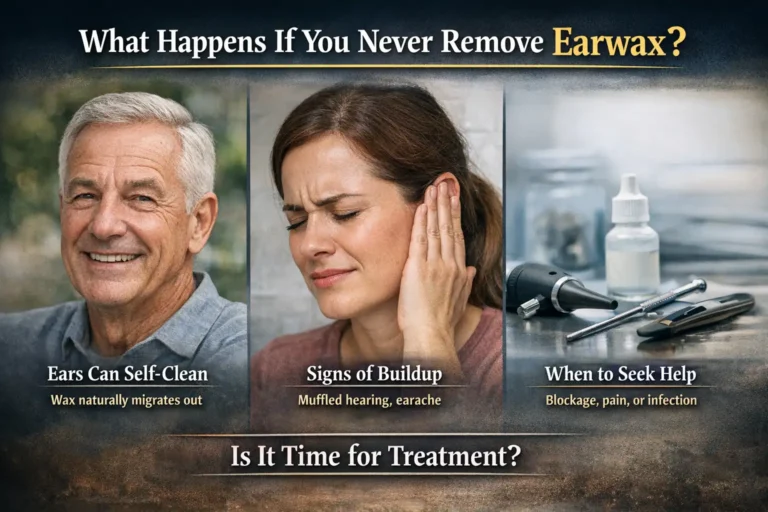
Most people reach for a cotton bud the moment their ears feel blocked. It feels like the obvious thing to do. But in most cases, it makes things worse, not better.
Earwax removal is one of those topics where common sense and actual medical advice tend to go in completely opposite directions. Our pharmacist team gets asked about this regularly. So let’s sort out what’s safe, what’s not, and when you genuinely need professional help.
Quick Answer
Most people do not need to remove earwax themselves. The ear is self-cleaning. If you have a mild buildup, over-the-counter ear drops can help soften the wax so it moves out naturally. Avoid cotton buds, ear candles, or anything you might be tempted to poke inside the ear canal. If your hearing feels blocked or you have pain, see a pharmacist or GP before trying anything at home.
What Is Earwax and Why Is It Important?
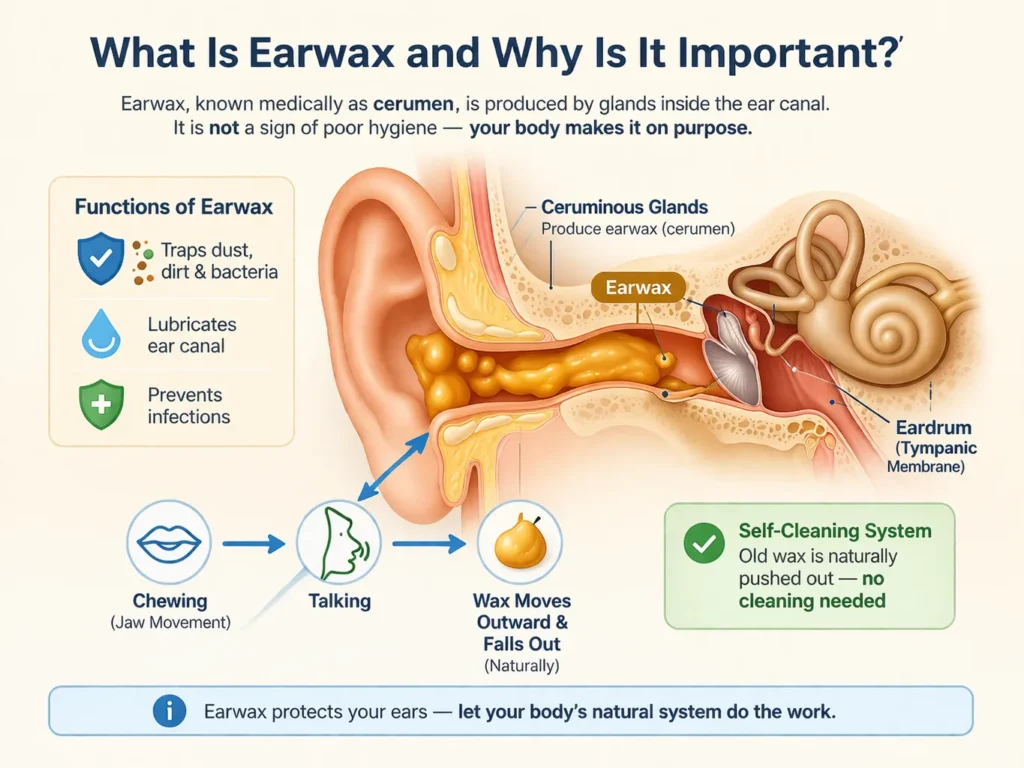
Earwax, known medically as cerumen, is produced by glands inside the ear canal. It is not a sign of poor hygiene. Your body makes it on purpose. Understanding what earwax is and why your body makes it helps explain why most attempts to remove it cause more harm than good.
It traps dust, dirt, and bacteria before they reach the eardrum. It also lubricates the skin inside the canal, which stops it from drying out or cracking. Without it, the ear would be far more prone to infections.
The ear has its own cleaning system. Chewing, talking, and jaw movement gradually push old wax towards the outer ear, where it dries and falls out. Most of the time, you do not need to do anything at all.
Should You Remove Earwax Yourself?
The short answer is: probably not, and almost certainly not the way most people try.
For the majority of people, earwax is not a problem. It sits in the canal, does its job, and exits on its own. Interfering with that process often causes more harm than good.
That said, some people do produce more wax than their ears can clear naturally. Older adults, people who wear hearing aids, and those who use in-ear headphones frequently tend to get more buildup. In those cases, gentle softening drops at home are a reasonable first step. Anything beyond that should be done by a trained professional.
Signs of Earwax Buildup
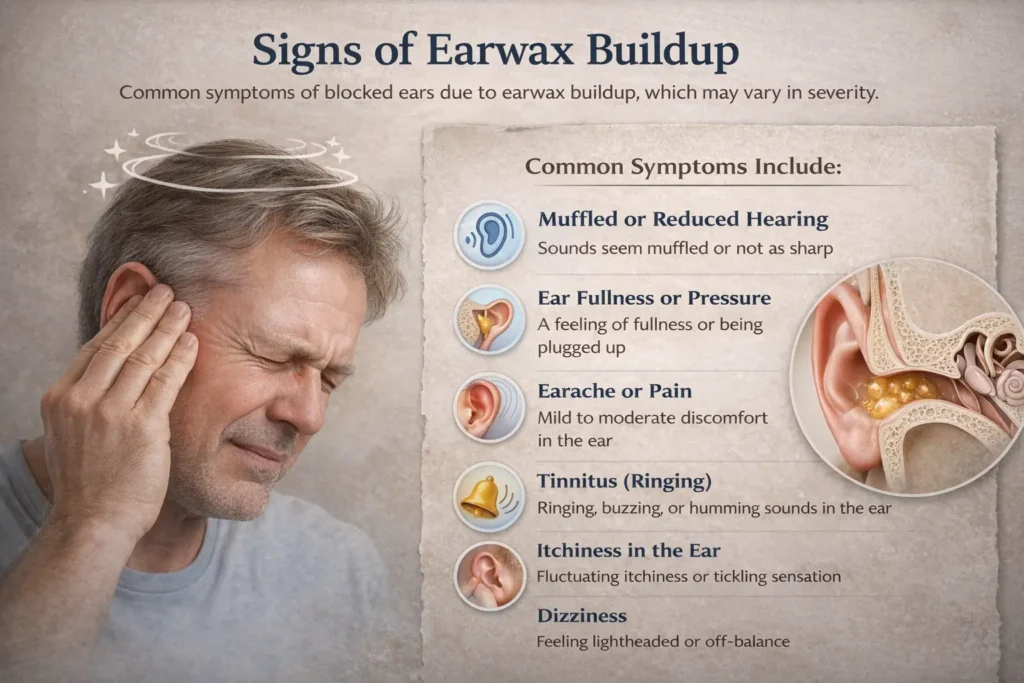
Knowing when earwax has actually become a problem matters, because not every blocked feeling means you need treatment. The symptoms of earwax blockage can range from mild to significant, and some overlap with other conditions.
Common signs that wax has built up to a problematic level include:
- Muffled or reduced hearing in one or both ears
- A feeling of fullness or pressure inside the ear
- Earache or mild discomfort
- Tinnitus, which is a ringing, buzzing, or humming sound
- Itchiness inside the canal
- Dizziness in some cases, though this is less common
If you are experiencing any of these, it is worth getting it assessed before trying to sort it yourself. Some of these symptoms can also point to other conditions that have nothing to do with wax.
Safe Ways to Remove Earwax at Home
If your symptoms are mild and you have no history of ear problems, there are a few home options worth trying.
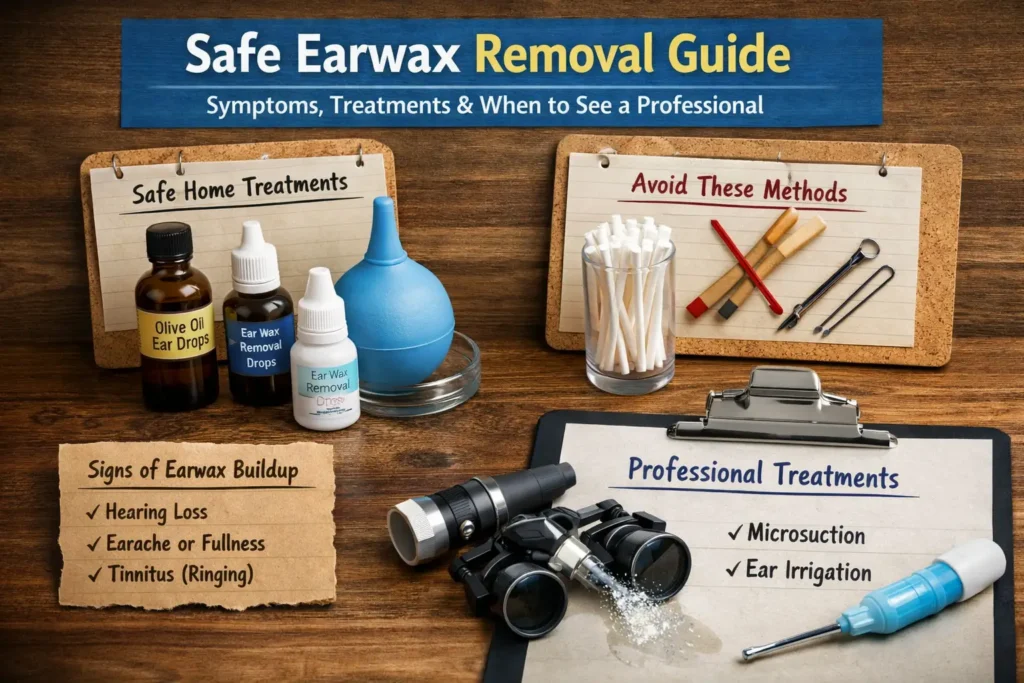
Over-the-counter ear drops are the first thing I’d recommend. Products containing olive oil, almond oil, or sodium bicarbonate help soften the wax so it can migrate out naturally. You do not need expensive branded products. A small bottle of medical-grade olive oil from the pharmacy works well. Use it for five to seven days and give it time.
Saline drops or hydrogen peroxide products are used in some countries but are not routinely recommended in UK primary care guidance. Stick to olive oil, almond oil, or sodium bicarbonate drops, all available from your pharmacy. As these are the options most supported by NHS guidance.
Warm water irrigation using a soft bulb syringe can help flush out softened wax after using drops for several days. Tilt your head, gently squeeze warm (not hot) water into the canal, then tilt the other way to let it drain. Never force the water in under pressure.
A few important caveats. Do not attempt any of these if you have had a perforated eardrum in the past, if you have had ear surgery, or if you have an active ear infection. In those cases, speak to a pharmacist or GP first.
Methods You Should Never Use
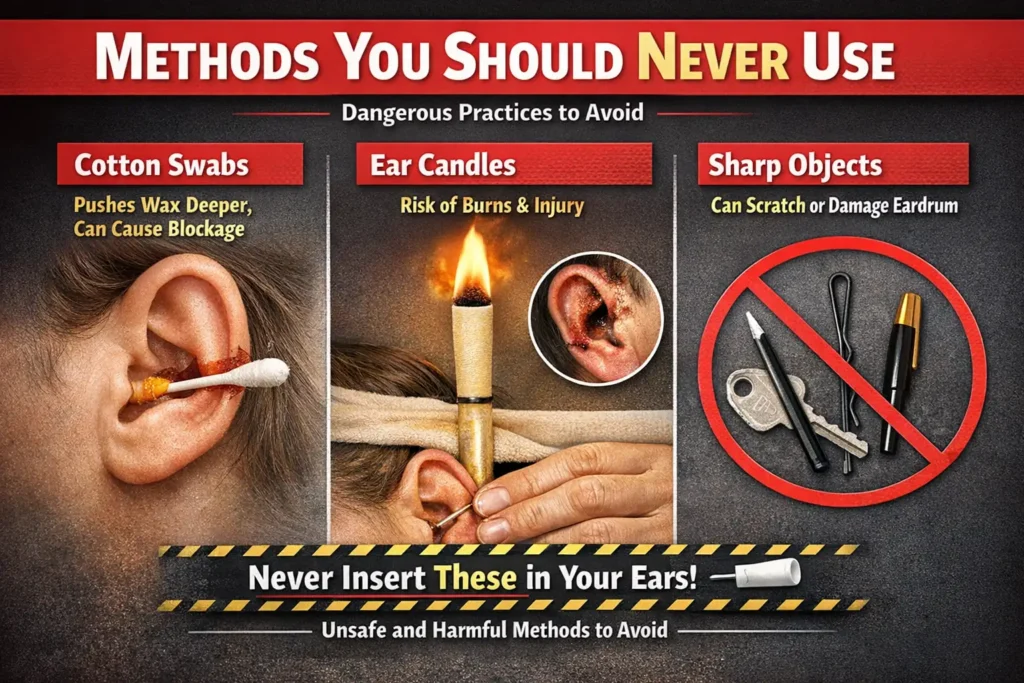
This is where I want to be very direct, because these methods come up constantly and they genuinely cause harm.
Cotton buds are not designed for the inside of the ear canal. The packaging on most brands even says as much now. Rather than removing wax, cotton buds push it further down the canal and compact it against the eardrum. That is how blocked ears often get worse after people try to clean them.
Ear candles have no credible evidence behind them and are not recommended by NICE or any UK clinical body. In practice, this does not happen. What does happen is an open flame near your ear, hot wax dripping in, and in some reported cases, burns to the ear canal or eardrum. I would never recommend them.
Hairpins, keys, pen lids, or any sharp object should never go near the inside of your ear. The ear canal skin is delicate. The eardrum sits only a few centimetres in. Scratches, perforations, and infections are all real risks.
When to See a Doctor for Earwax Removal
Home treatment does not always work, and that is fine. Some wax is too impacted to shift with drops alone.
Book an appointment if:
- Drops have not helped after a week
- Your hearing loss is noticeable or getting worse
- You have ear pain that is not resolving
- No improvement after a week of drops, or symptoms are severe from the start, book an appointment.
- You have a history of ear problems, perforations, or surgery
- The symptoms are in a child, always consult a pharmacist or GP first before attempting any earwax removal.
Many GP practices now refer patients to pharmacies or audiology clinics for earwax removal, so a pharmacist is often a good first port of call.
How Doctors and Pharmacists Safely Remove Earwax
Professional earwax removal is safer, more effective, and less uncomfortable than most people expect.
Ear irrigation uses a controlled flow of warm water to flush wax out. It is the most common method used in GP practices and some pharmacies. You will usually be asked to use softening drops for a few days beforehand to improve results.
Microsuction earwax removal is widely used in private ear clinics and is particularly suitable for people who cannot have irrigation for example, those with a history of perforated eardrums or previous ear surgery. Ear irrigation remains the recommended first-line procedure in most NHS and primary care settings. Both are safe and effective when carried out by a trained professional.
Manual removal uses fine instruments, such as a wax hook or curette, to extract wax under direct vision. This is usually done by a GP or ear nurse and tends to be reserved for wax that cannot be removed by the other methods.
FAQs
Is it normal to have a lot of earwax?
Yes. The amount of wax the body produces varies from person to person. Some people naturally make more than others. Ethnicity, age, and ear anatomy all play a role. More wax does not automatically mean a problem unless it causes symptoms.
Can earwax cause permanent hearing loss?
Wax-related hearing loss is almost always temporary. Once the blockage is cleared, hearing typically returns to normal. If hearing loss persists after removal, it points to a different underlying cause and should be investigated.
How often should I clean my ears?
For most people, never. The ears clean themselves. If you are prone to buildup, using a few drops of olive oil once or twice a week as a preventive measure is reasonable, especially if you wear hearing aids regularly.
Can children have their earwax removed at home?
With caution. Softening drops are generally safe for children over three, but it is worth checking with a pharmacist first. Never attempt irrigation or manual removal on a child at home. If a child’s hearing seems affected, get it checked by a GP or audiologist.
Does wearing earphones cause more earwax?
There is good reason to think so. In-ear headphones can slow the natural migration of wax by blocking the canal opening. They can also push wax inward with repeated insertion. Taking breaks from in-ear headphones and keeping them clean helps reduce the risk.
Can stress make earwax worse?
Stress does stimulate the glands that produce earwax. It is not a major factor for most people, but it can contribute in those who are already prone to buildup.
Is olive oil or sodium bicarbonate better for softening wax?
Both work. Olive oil tends to be gentler and better tolerated for regular use. Sodium bicarbonate drops can be more effective at breaking down harder, older wax but may cause mild irritation in some people. Either is a reasonable starting point.
Conclusion
Earwax is not the enemy. It is a normal, protective part of ear function. For most people, the best approach is to leave it alone and let the ear do its job.
If you do have a blockage, softening drops are a safe first step. Skip the cotton buds, skip the candles, and skip anything sharp. If things do not improve in a week, or if your symptoms are significant, speak to a pharmacist or book an earwax removal appointment for professional removal.
Getting it treated properly takes less time than you’d think, and it makes a real difference. Blocked ears bothering you? Speak to your local pharmacy team about earwax removal options, including microsuction and ear irrigation. Most appointments take under 30 minutes and you will leave hearing clearly again.