Most people worry they’re not cleaning their ears enough. You’ve probably heard someone say “you should be cleaning your ears every week.” But that advice is, more often than not, wrong. The truth about earwax is a lot more interesting than most people realise.
So, what happens if you never remove earwax? For most people, not much at all. Your ears are designed to handle it. That said, there are times when earwax does become a genuine problem, and knowing the difference matters.
Quick Answer
In most cases, your ears clean themselves naturally. Earwax works its way out on its own through normal jaw movement and skin migration. You don’t need to remove it regularly. Problems only tend to arise when earwax builds up and becomes impacted, which can cause hearing loss, discomfort, or infections. If you have no symptoms, your ears are likely fine as they are.
What Is Earwax and Why Does Your Body Produce It?
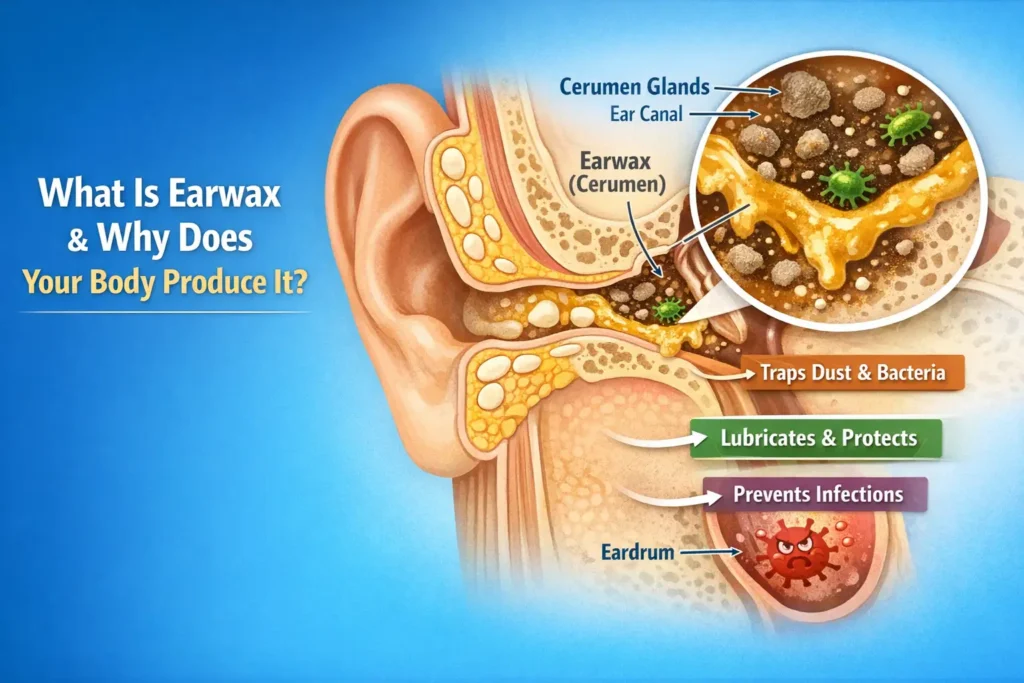
Understanding what earwax is and why your body makes it is the starting point. Earwax, or cerumen, isn’t a sign that your ears are dirty. Your body produces it on purpose. Glands inside the outer ear canal make this waxy substance to protect the delicate skin lining your ear.
It traps dust, bacteria, and small debris before they reach the eardrum. It also keeps the ear canal lubricated, which prevents dryness and itching. Think of it as your ear’s built-in filter system.
Without earwax, your ear canal would be more exposed to infection and irritation. It’s part of your body’s natural defence, and it works quietly in the background every day.
What Happens If You Never Remove Earwax?
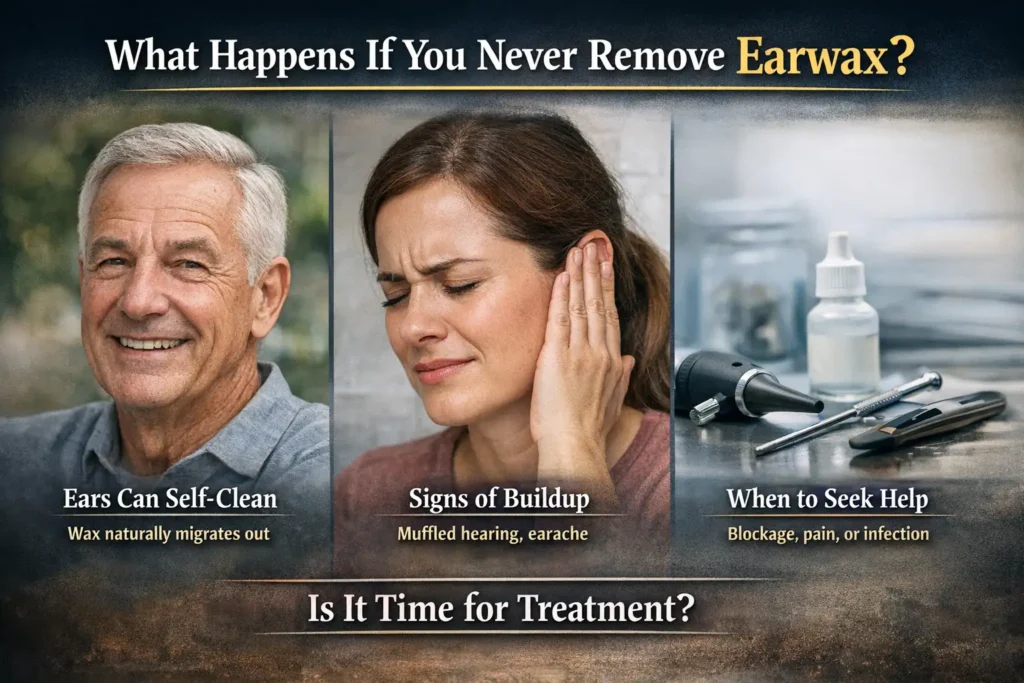
For the majority of people, nothing harmful happens if earwax is never manually removed. Your ears are self-cleaning by design. As you chew, talk, and move your jaw, old earwax gradually migrates from the deeper canal out toward the ear opening, where it dries up and falls away.
This process happens without you doing anything. Skin cells inside the ear canal grow outward in a slow, steady movement, carrying wax with them. Many people go their entire lives without ever needing earwax removed.
If you have no symptoms, your ears are doing exactly what they should. Leaving them alone is not laziness. It’s the right approach.
When Earwax Can Build Up
Not everyone’s ears self-clean equally well. Some people naturally produce more earwax than others. Narrow or unusually shaped ear canals can slow down the migration process.
Hearing aid users and those who wear in-ear earphones frequently are at higher risk. These devices push wax back into the canal rather than letting it move out. Older adults also tend to produce drier, harder wax that doesn’t migrate as easily.
Using cotton buds is another common culprit. Rather than removing wax, they push it deeper, which is where impaction begins.
Symptoms of Earwax Buildup
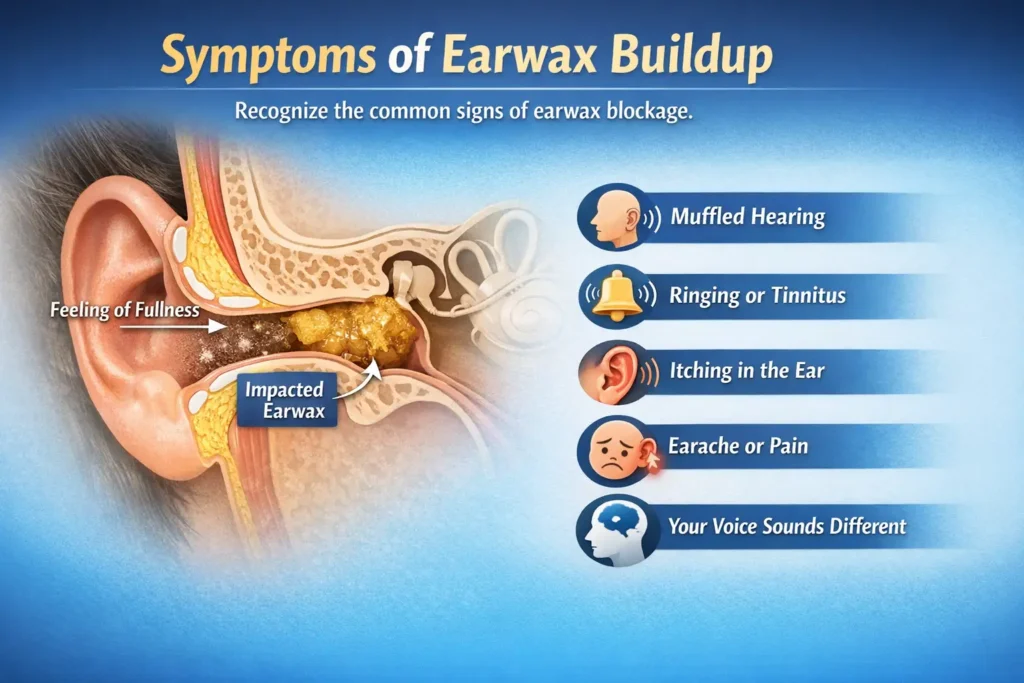
You may not notice any symptoms until earwax is quite built up. The ear canal can be partially blocked before you feel any real change. Reading up on the signs of earwax buildup helps you know when it’s time to act rather than wait.
Common signs include:
- A feeling of fullness or pressure in the ear
- Muffled or reduced hearing
- Ringing or buzzing sounds (tinnitus)
- Itching or mild discomfort inside the ear
- Earache or a dull ache that comes and goes
- A sensation that your voice sounds different inside your head
If you’re experiencing any of these, it’s worth getting your ears checked. These symptoms don’t always mean impaction, but it’s the most common cause.
Potential Problems Caused by Impacted Earwax
When earwax becomes truly impacted, it stops being harmless. Left untreated, it can lead to a range of problems that go beyond mild discomfort.
Temporary Hearing Loss Impacted wax can block sound from reaching the eardrum. This type of hearing loss is usually temporary and resolves once the wax is removed. People often describe it as having a hand over one ear.
Ear Infections Blocked wax creates a warm, moist environment inside the canal. Bacteria and fungi can grow more easily in these conditions. Infections can cause pain, discharge, and in some cases, a high temperature.
Ear Canal Irritation Hardened wax pressing against the skin of the ear canal can cause soreness and inflammation. This is more common in people who have already attempted removal with cotton buds and pushed the wax in further.
Balance Problems The ear plays a role in balance. Severe wax buildup, particularly if it causes infection, eardrum pressure, balance disruption. This is less common, but it does happen, especially in older patients.
Safe Ways to Manage Earwax
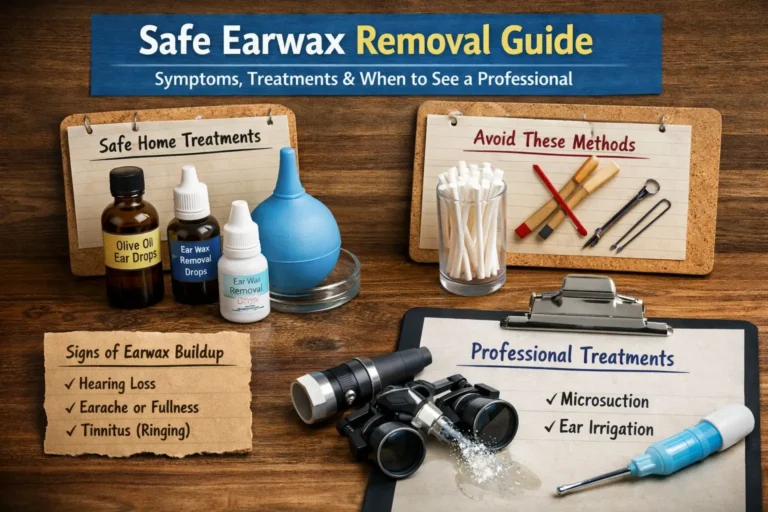
If you do have symptoms of buildup, there are safe options available. Earwax softening drops, often containing olive oil or sodium bicarbonate, can help loosen wax and allow it to move out naturally. These are available over the counter at most pharmacies.
Use them for a few days, and in many cases, the wax will shift on its own. Lying on your side after applying drops helps the oil reach further into the canal.
If drops don’t work, professional earwax removal is the next step. Options include ear irrigation and microsuction, both of which are safe and effective when carried out by a trained professional. Microsuction is particularly suitable for those who cannot have water-based irrigation for example, people with a history of perforated eardrums or previous ear surgery.
Ear Cleaning Methods to Avoid
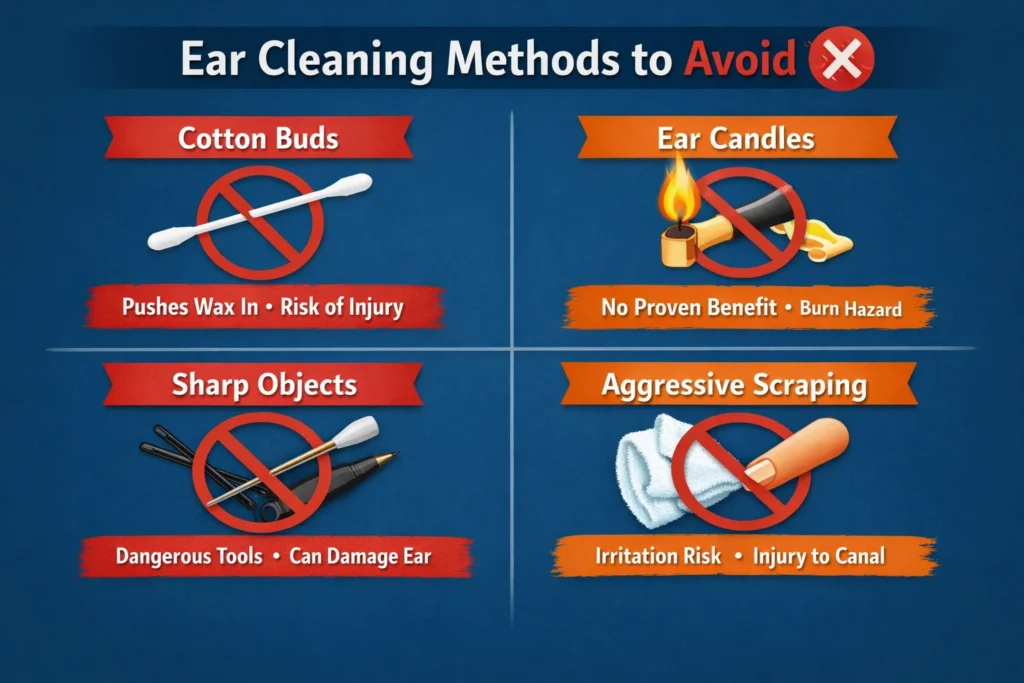
Some common cleaning habits do more harm than good. It’s worth knowing which ones to stop.
Cotton Buds These are not designed to clean inside the ear canal. They compact wax rather than remove it, and they carry a real risk of perforating the eardrum if pushed too far.
Ear Candles There’s no clinical evidence that ear candles work. They don’t create suction, they don’t draw out wax, and they carry a risk of burns and candle wax entering the ear canal.
Sharp Objects or Tools Kirby grips, pen lids, and similar objects should never go near the ear canal. Skin inside the canal is very thin and easy to damage.
Aggressive Ear Scraping Some people use the corner of a towel or a finger to scrape wax out. Done gently around the outer ear, this is fine. Going deeper with force risks irritating or injuring the canal.
When to See a Doctor or Pharmacist for Earwax
You don’t always need a GP. A community pharmacist can assess your symptoms and recommend the right next step. If any of the symptoms listed above persist after a week of using drops, or if they are severe from the outset, book a professional assessment.
See a GP or specialist if:
- Ear drops haven’t helped after 1 to 2 weeks of regular use.
- You have a history of perforated eardrums
- You’ve had ear surgery in the past
- Symptoms are getting worse rather than better
- You have discharge or signs of infection
Microsuction is available at many community pharmacies and private clinics. It’s quick, safe, and doesn’t require a GP referral.
FAQs
Can earwax cause tinnitus?
Yes, in some cases. Impacted earwax pressing on the eardrum can trigger ringing, buzzing, or hissing sounds. This type of tinnitus usually resolves once the wax is removed. If tinnitus continues after removal, further investigation may be needed.
Is it normal to have one ear with more wax than the other?
Completely normal. Ear canals differ in size and shape, even between your two ears. One may produce more wax or have a slower migration rate. It doesn’t necessarily mean anything is wrong.
How often should earwax be professionally removed?
There’s no set schedule. Some people need it every few months, others never need it at all. If you notice symptoms returning regularly, speak to a pharmacist about a routine that works for you.
Can children get impacted by earwax?
Yes. Children can develop earwax buildup just as adults can. If a child is frequently asking you to repeat yourself or seems to not hear well, impacted wax is worth ruling out. Ear drops formulated for children are available, and professional removal is an option if needed.
Does swimming make earwax buildup worse?
Water in the ear can soften wax and cause it to swell, which may temporarily worsen a partial blockage. If you swim regularly and notice symptoms afterwards, it’s worth checking whether you have a buildup that needs clearing first.
Can earwax affect your sleep?
Indirectly, yes. The pressure and fullness from impacted wax can be more noticeable when lying down. Some people find tinnitus worsens at night in a quiet environment. Removing the blockage usually resolves these issues.
Is it true that olive oil can dissolve earwax?
Olive oil doesn’t dissolve wax, but it does soften it. Softened wax migrates out of the ear more easily. It’s one of the most recommended options precisely because it’s gentle, cheap, and widely available.
Conclusion
Your ears are largely self-sufficient. For most people, earwax never needs to be manually removed. The body handles it on its own, and interfering with that process often causes more problems than it solves.
That changes when wax becomes impacted. Hearing loss, infections, and persistent discomfort are real consequences of leaving a true blockage untreated. Knowing the difference between normal ear function and a buildup that needs attention is what counts.
If you’re having symptoms, don’t reach for a cotton swab. Speak to a pharmacist first. Many pharmacies now offer professional microsuction, and it’s far safer than any at-home method.Is earwax blocking your hearing?Book a professional microsuction appointment at your local pharmacy. Fast, safe, and no referral needed.