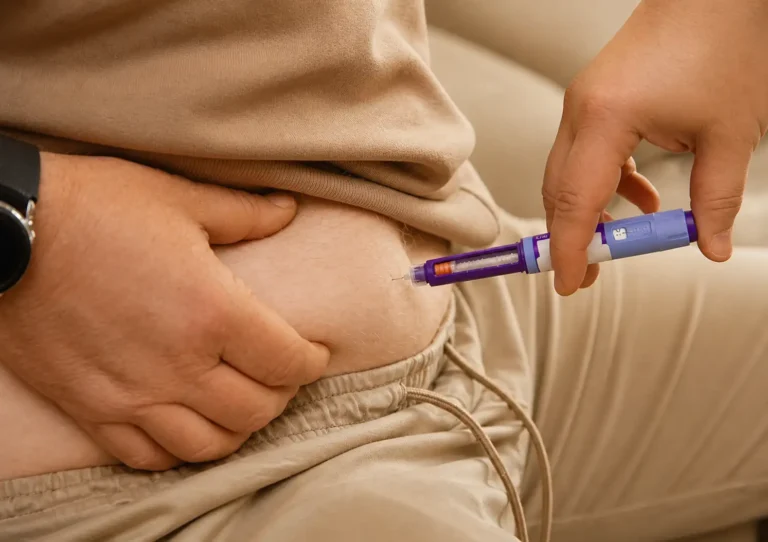

Mounjaro (tirzepatide) does not list smoking as a contraindication, and there is no confirmed direct drug interaction between nicotine and tirzepatide. That said, smoking carries its own cardiovascular and respiratory risks that can work against the health goals most people have when starting Mounjaro.
Some users also report reduced urges to smoke while on Weight loss treatment, though this is not a guaranteed or universal effect. Read on to understand what the evidence actually says, where the gaps are, and what you should discuss with your prescriber.
Does Smoking Interact With Mounjaro?

The official prescribing information for Mounjaro does not flag smoking or nicotine as a known drug interaction. There is no pharmacokinetic evidence showing that smoking directly reduces tirzepatide’s effectiveness in the body.
Nicotine acts on its own pathways. It affects heart rate, blood pressure, insulin sensitivity, and appetite regulation independently of Mounjaro. These are separate mechanisms, not an interaction in the clinical sense.
What matters here is the broader picture. Smoking increases cardiovascular risk. Mounjaro is often prescribed to people who already carry metabolic risk factors. Combining the two does not create a drug interaction, but it does create a more complicated health profile that your prescriber should know about.
Can You Vape While Using Mounjaro?

Vaping is not the same as smoking, and it is worth separating the two clearly. Vaping does not involve tobacco combustion, so the tar-related risks are absent. But the risk profile depends heavily on whether the vape contains nicotine.
Nicotine-containing vapes carry similar cardiovascular concerns to cigarettes. Nicotine raises blood pressure and heart rate, and those effects remain relevant when you are on a weight-loss treatment that already influences metabolic function.
Nicotine-free vapes carry fewer documented risks, but the long-term respiratory effects of inhaling vaporised compounds are still being studied.
Neither form of vaping has a documented interaction with tirzepatide. That does not make either option risk-free. If you vape regularly, disclose this to your prescriber in the same way you would disclose smoking.
Can Mounjaro Affect Smoking or Vaping Habits?

This is where it gets genuinely interesting. A number of people using Mounjaro and other GLP-1 based treatments report that their desire to smoke or vape decreases during treatment. These are not side effects listed in the product information, but the reports are consistent enough to attract serious research attention.
The most commonly reported pattern is reduced frequency. People describe reaching for a cigarette less often, sometimes without consciously trying to cut down. Routine disruption plays a role here too. Mounjaro often changes eating habits significantly, and smoking is frequently tied to habitual cues around meals, breaks, or stress.
Experiences vary widely between individuals. Some users report no change at all. It would be a stretch to say Mounjaro reliably reduces smoking, but it would also be inaccurate to dismiss the reported experiences.
Why Might Mounjaro Reduce Nicotine Cravings?

The possible mechanisms are genuinely worth understanding, even if the evidence is still developing. Mounjaro activates both GLP-1 and GIP receptors. These receptors are not limited to the gut and pancreas. They are present in areas of the brain involved in appetite control, motivation, and behavioural reinforcement.
Nicotine cravings, like food cravings, involve reward-driven behaviour. If tirzepatide alters how the brain processes reward signals more broadly, it could theoretically reduce the pull of nicotine alongside the pull of food. The key word there is theoretically. This is an area of active investigation, not settled science.
The Role of GLP-1 in the Brain
GLP-1 receptors are found in several brain regions, including the hypothalamus and parts of the limbic system. These areas are involved in regulating appetite, mood, and behaviour.
Research into GLP-1 receptor agonists and addiction is growing. Some animal studies have shown reduced alcohol and nicotine seeking behaviour in rodents treated with GLP-1 agonists. Human studies are fewer and smaller, but early findings point in a similar direction.
This does not mean Mounjaro is a smoking-cessation drug. It means researchers are asking the right questions, and the answers may come in the next few years.
Dopamine and Reward Pathways
Nicotine works largely by triggering a spike in dopamine, the brain’s reward chemical. That spike is what drives the repetitive behaviour of smoking. Over time, the brain adjusts, and the craving becomes a learned response rather than a purely chemical one.
GLP-1 receptor activation appears to modulate dopamine signalling in some brain circuits. If that modulation reduces the intensity of reward responses, it could blunt the reinforcing effect of nicotine. Again, this is an active research area. The mechanisms are plausible, but confirmation in large human trials is still needed.
Changes in Taste, Appetite, and Routine
Many people on Mounjaro find that food tastes different, portion sizes shrink, and their relationship with eating changes meaningfully. Smoking behaviour is often linked to the same lifestyle routines as eating, such as after-meal cigarettes, breaks at work, or stress-eating alongside stress-smoking.
When appetite and food behaviour shift, associated habits sometimes shift with them. This is a behavioural mechanism rather than a pharmacological one, but it is no less real for that. Routine disruption can be a genuine driver of habit change, and Mounjaro tends to disrupt routines.
What Does the Research Say About Mounjaro and Smoking?

Tirzepatide-specific research on smoking is limited. Most of the relevant evidence comes from studies on GLP-1 receptor agonists more broadly, particularly semaglutide and liraglutide.
Early human research is encouraging. A 2025 randomised trial found low-dose semaglutide reduced heavy drinking and craving in people with alcohol use disorder, and a large 2024 population study linked semaglutide to lower rates of alcohol use disorder. Nicotine-specific human evidence is less developed, though animal studies consistently show reduced nicotine-seeking.
The distinction between animal and human evidence matters. Rodent models do not always translate to human behaviour. What we can say is that the biological mechanisms are plausible, the animal evidence is consistent, and the human evidence is early but directionally interesting.
Can Mounjaro Help You Quit Smoking?

Some people do find that quitting becomes easier while on Mounjaro. That may be down to the neurological effects described above, or it may be behavioural, or a combination of both. Either way, it is worth knowing that Mounjaro is not approved as a smoking-cessation medication.
Using it to quit smoking is not supported by current evidence in the way that licensed treatments are. Approved options for stopping smoking in the UK include nicotine replacement therapy; varenicline (available again on the NHS); cytisine (cytisinicline); bupropion (Zyban); and behavioural support through NHS Stop Smoking Services. Re-check at publish, as this area is moving.
If you are on Mounjaro and find your smoking habits decreasing, that is worth discussing with your GP or pharmacist. It may be a good moment to add structured support. Do not rely on Mounjaro alone as a cessation strategy.
Risks and Important Considerations for Smokers Taking Mounjaro
Smoking affects cardiovascular health in ways that are directly relevant to people on Mounjaro. Weight-loss treatment is often prescribed in the context of obesity-related conditions like type 2 diabetes, high blood pressure, or raised cholesterol. Smoking worsens all of these.
Nicotine raises blood pressure and increases heart rate. It reduces HDL (good) cholesterol and promotes the buildup of arterial plaque. These effects run counter to the cardiovascular improvements that weight loss aims to support.
Respiratory health also matters. Mounjaro can cause nausea and occasionally vomiting, particularly in early treatment. Smoking compromises lung function and respiratory resilience, which may affect overall tolerance during treatment. This is not a reason to avoid Mounjaro, but it is a reason to be honest with your prescriber about your smoking history and current habits.
Frequently Asked Questions
Does smoking make Mounjaro less effective for weight loss?
There is no direct evidence that smoking reduces tirzepatide’s pharmacological effectiveness. However, smoking-related metabolic changes, including insulin resistance and inflammation, may affect your overall health outcomes during treatment.
Can smoking while on Mounjaro cause serious side effects?
No serious side effects have been specifically linked to the combination of smoking and Mounjaro. The main concerns relate to cardiovascular health, which is already a consideration for anyone who smokes and carries metabolic risk factors.
Should I tell my prescriber I smoke before starting Mounjaro?
Yes. This is part of a standard medical history review, and it matters for assessing cardiovascular risk. Your prescriber needs this information to give you appropriate guidance.
Can I use nicotine patches or gum while on Mounjaro?
Nicotine replacement therapy is not contraindicated with Mounjaro based on current prescribing information. If you are planning to use NRT alongside Mounjaro, mention it to your prescriber or pharmacist so they can monitor your blood pressure and overall progress.
Is weed (cannabis) smoking the same as cigarette smoking with respect to Mounjaro?
Cannabis smoke shares some of the respiratory risks of tobacco smoke. Cannabis also affects appetite and reward processing through its own mechanisms. There is very little research on cannabis use alongside tirzepatide, so caution is sensible. Disclose cannabis use to your prescriber in the same way as tobacco.
When Should You Talk to a Healthcare Provider?

Speak to your GP or pharmacist before starting Mounjaro if you are a current smoker or vaper. Discuss your cardiovascular history, current blood pressure, and any previous attempts to quit. If you notice changes in your smoking habits once you start Mounjaro, good or otherwise, flag these at your next review.
And if you are considering stopping smoking, ask about NHS Stop Smoking Services, which offer free support and are far more likely to help than trying to manage it alone.
Final Thoughts
Smoking is not a contraindication to Mounjaro, and there is no confirmed drug interaction. The real concern is the cumulative cardiovascular risk. Some users do report reduced nicotine cravings during treatment, and research into GLP-1 receptor agonists and addiction is growing.
For now, Mounjaro is a weight-loss treatment, not a smoking-cessation tool. Be open with your prescriber, consider stopping smoking through established routes, and let your Mounjaro treatment do what it is licensed to do.