

Your hearing feels muffled, one ear feels full, and there may be ringing. These symptoms often go ignored for months before people realize earwax blockage is the cause.
This guide covers all earwax blockage symptoms, from early signs to serious ones needing attention. It also explains who’s at risk, how to distinguish wax from infection, and when to seek treatment.
Quick answer: The most common symptoms are muffled hearing, a feeling of fullness or pressure in the ear, tinnitus (ringing or buzzing), earache, and itchiness. In more severe cases, blocked wax can cause dizziness and sharp pain. Symptoms often appear suddenly after water enters the ear, which causes the wax to swell. Professional Earwax removal is the safest way to clear it.
What Is EarWax Blockage?

Earwax is made naturally by glands inside the ear canal. For most people, it migrates out on its own over time. When that process is disrupted by the shape of the canal, cotton bud use, hearing aids, or simply overproduction, wax accumulates and hardens.
When it builds up enough to partially or fully block the canal, it’s called cerumen impaction. It’s one of the most common ear problems seen in pharmacy and GP settings in the UK. It affects people of all ages, and it’s entirely treatable.
Early Symptoms of Ear Wax Build-Up
Early signs are often subtle. Most people dismiss them or put them down to tiredness, a mild cold, or getting older. But there are clear patterns to look for.
Slight reduction in hearing
Usually, the first thing people notice. Sounds seem a little quieter or less clear than usual, often in one ear more than the other.
A sensation of fullness in the ear
It feels similar to the pressure on a plane or going underwater. It doesn’t necessarily hurt, but something feels off.
Mild itchiness inside the ear canal
As wax builds up, it irritates the delicate skin lining the canal. A nagging itch that cotton buds only make worse.
Faint ringing or buzzing
Low-level tinnitus can start early. Easy to ignore at first, but it tends to get more persistent as the blockage worsens.
Your own voice sounds louder inside your head
Some people notice this when chewing or talking, known as the occlusion effect. Slightly disconcerting if you’ve never experienced it before.
Moderate Symptoms: Harder to Ignore
As the blockage becomes more established, things get more disruptive.
More noticeable hearing loss.
What started as slight muffling becomes harder to manage. Following conversations gets difficult, particularly with background noise. Some people describe it as hearing through a wall.
Persistent tinnitus
The ringing or buzzing becomes more constant, most noticeable at night or in quiet rooms, which can affect sleep.
Pressure that won’t pop
Unlike the pressure you’d feel on a flight, which usually clears, impaction pressure doesn’t shift. Swallowing, yawning, jaw movements, none of it helps.
Mild earache
Compacted wax pressing against the eardrum can cause a dull, persistent ache. Different from the sharp pain of an ear infection more of a background discomfort.
Sensitivity to loud sounds
Some people find normal volumes feel uncomfortably loud or distorted. The sealed canal amplifies sound in a way that becomes uncomfortable.
Severe Symptoms That Shouldn’t Be Ignored
When a blockage is complete or near-complete, symptoms become more pronounced and can significantly affect daily life.
Significant hearing loss
This can happen suddenly, particularly after a shower or swim, when water causes the wax to swell rapidly. Some people wake up with one ear completely blocked.
Sharp or intense earache
When wax presses hard against the eardrum, pain can become sharp and difficult to manage with over-the-counter pain relief alone.
Dizziness or feeling off-balance
The ear plays a role in balance. Pressure from severe wax impaction can affect this system, causing mild to moderate dizziness or vertigo. This one in particular warrants prompt professional attention.
Tinnitus that won’t stop
Constant ringing or buzzing, especially if it’s new and linked to recent hearing changes, should be assessed rather than waited out.
Discharge from the ear
In rare cases, deeply impacted wax can lead to secondary infection, causing fluid from the ear. If you see discharge alongside pain and hearing loss, see a GP or pharmacist the same day.
Ear Wax Blockage vs Ear Infection — How to Tell the Difference
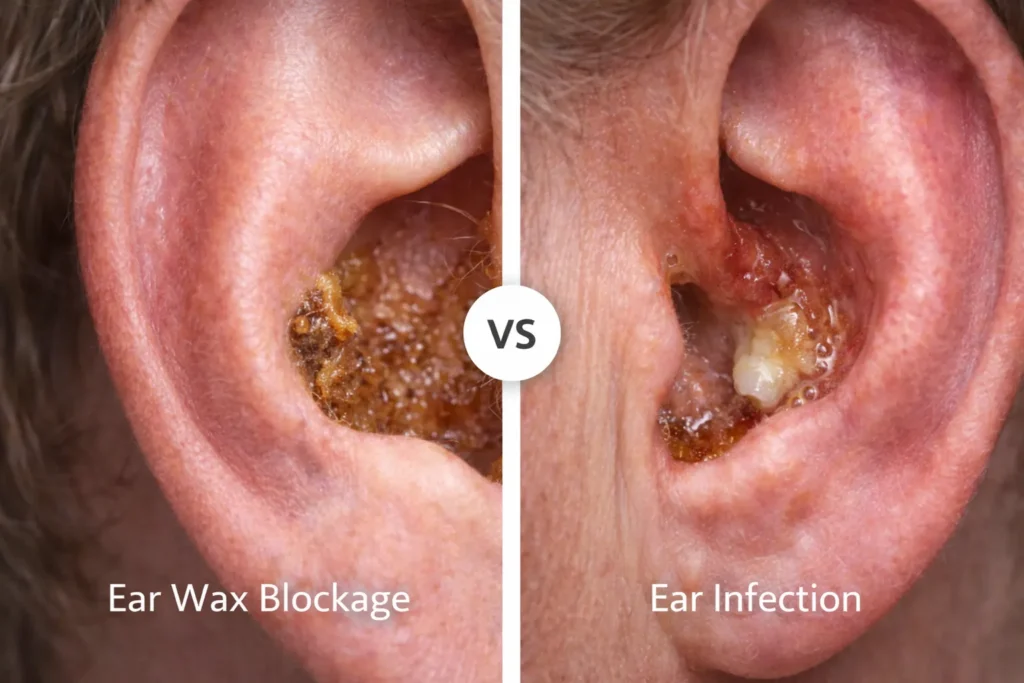
The symptoms can feel similar, which causes a lot of confusion. Here’s how to tell them apart.
Temperature
Ear infections often cause a fever. Earwax blockage does not.
Pain pattern
Wax tends to cause a dull pressure or ache. Ear infections typically bring sharper, more intense pain that may throb.
Discharge
Fluid from the ear points toward infection rather than wax build-up.
How it started
Wax build-up comes on gradually or suddenly after water exposure. Ear infections often develop quickly, sometimes alongside a cold or upper respiratory illness.
One ear or two
Wax blockage more commonly affects one ear. Bilateral infections are less common in adults.
Not sure which you have? A pharmacist can assess your ear and help you decide whether you need wax removal, ear drops, or a GP appointment.
Who Is Most at Risk?
Some people are more prone to wax build-up than others.
Older adults
Wax becomes drier and harder with age, and the ear’s self-cleaning mechanism slows down. Cerumen impaction is significantly more common in people over 65.
Hearing aid and earbud users
Anything inserted into the ear canal regularly can push wax inward and trigger further production.
People with narrow or curved ear canals
The shape of your canal affects how well wax migrates out. This is often genetic.
Cotton bud users
Regular cotton bud use is one of the leading causes of impaction across all age groups. They push wax deeper rather than removing it.
People with skin conditions
Eczema or psoriasis can affect the skin of the ear canal and alter how wax is produced and cleared.
Children
Narrower ear canals mean build-up is a common cause of hearing issues and ear complaints in younger children.
When Should You See a Doctor or Pharmacist?
You don’t always need a GP. A pharmacist can assess your ears and recommend or carry out removal in most straightforward cases. But some situations need a GP.
See a pharmacist or book an ear wax removal appointment if your hearing has become muffled, your ear feels blocked or full, you have tinnitus that started recently, or you want a professional check before trying ear drops at home.
See your GP if you have ear pain alongside discharge, you’ve recently had ear surgery or a perforated eardrum, you have sudden severe hearing loss in one ear with no obvious cause, or dizziness comes alongside ear symptoms.
Don’t wait it out if symptoms are affecting your day-to-day life. Once wax impaction reaches the point of causing symptoms, it rarely clears on its own.
Frequently Asked Questions
How do you know if you have earwax blockage?
The clearest signs are muffled hearing in one ear, a feeling of fullness or pressure, and ringing or buzzing sounds. Symptoms often appear suddenly after water enters the ear. A pharmacist can confirm the cause by looking inside the ear canal.
Can earwax cause dizziness?
Yes. Severe impaction can put pressure on the eardrum and affect the balance system in the inner ear, causing mild dizziness or a feeling of being off-balance. If dizziness is significant or comes with nausea, get it checked promptly.
Is earwax blockage dangerous?
In most cases, no. It’s uncomfortable and disruptive, but it’s treatable. Left completely untreated for a long time, severe impaction can, in rare cases, contribute to hearing complications or secondary infection. Getting it cleared professionally removes the risk.
Can earwax cause headaches?
Wax blockage can cause a sensation of pressure that some people describe as headache-like, particularly around the temple or jaw. It can also disrupt sleep through tinnitus, which adds to head tension. It’s not a direct cause of headaches in the clinical sense, but the association is real for many patients.
How to know if you have earwax build-up?
Gradual hearing loss in one ear, a blocked sensation that won’t pop, and mild tinnitus are the most telling signs. If these appeared without a cold or infection, earwax is often the cause. A pharmacist can confirm with a simple visual inspection.
Can Earwax Cause Hearing Loss?
Yes, excess earwax can cause temporary hearing loss by blocking the ear canal and preventing sound from reaching the eardrum properly. In most cases, hearing returns to normal once the earwax is safely removed. You can know more about this in this page
Book Ear Wax Removal at Orrell Park Pharmacy, Liverpool
If you’ve been putting up with a blocked ear, muffled hearing, or persistent ringing, it’s worth getting it checked. Ear wax blockage is common, easy to treat, and no reason to just wait it out.
At Orrell Park Pharmacy, we offer professional microsuction ear wax removal, no referral needed, no GP appointment required, and most bookings are available the same week.