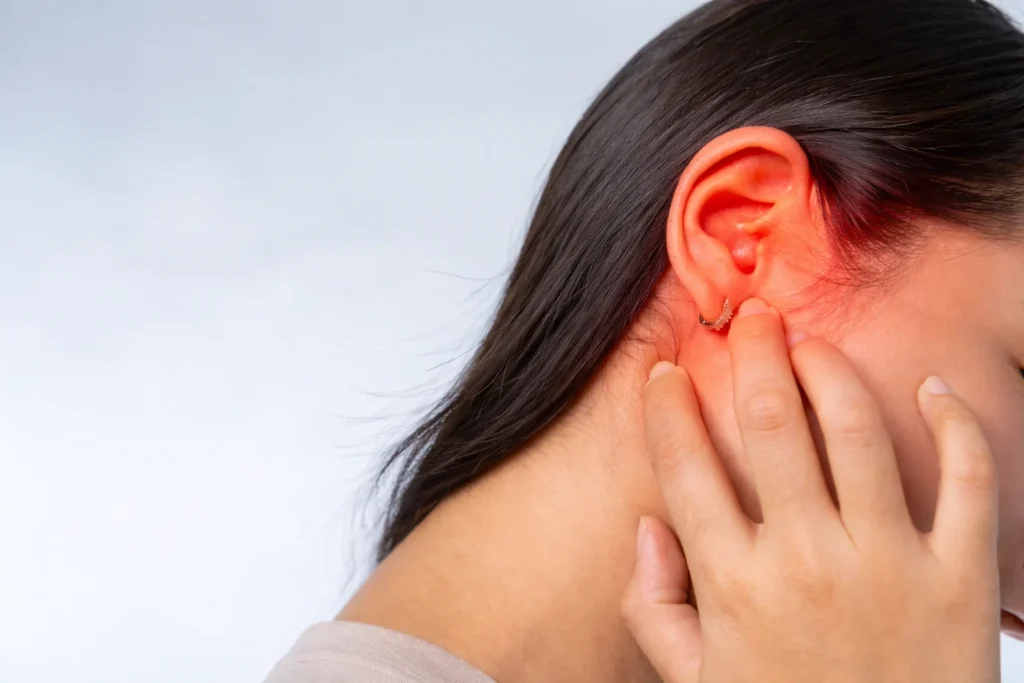
Earwax impaction is extremely common, affecting an estimated 700,000 to 2 million adults in England and Wales at any given time.
Blocked ears are one of the most common complaints pharmacists in the UK hear. And yes, earwax is usually the culprit. The good news is that earwax-related hearing loss is almost always temporary and straightforward to treat.
In many cases, earwax-related hearing loss is temporary, but persistent or sudden hearing loss should be assessed by a healthcare professional. You just need the wax removed safely.
This guide covers what earwax actually does, why it sometimes blocks sound, who is most at risk, and what your options are as a UK patient.
Can Earwax Cause Hearing Loss?
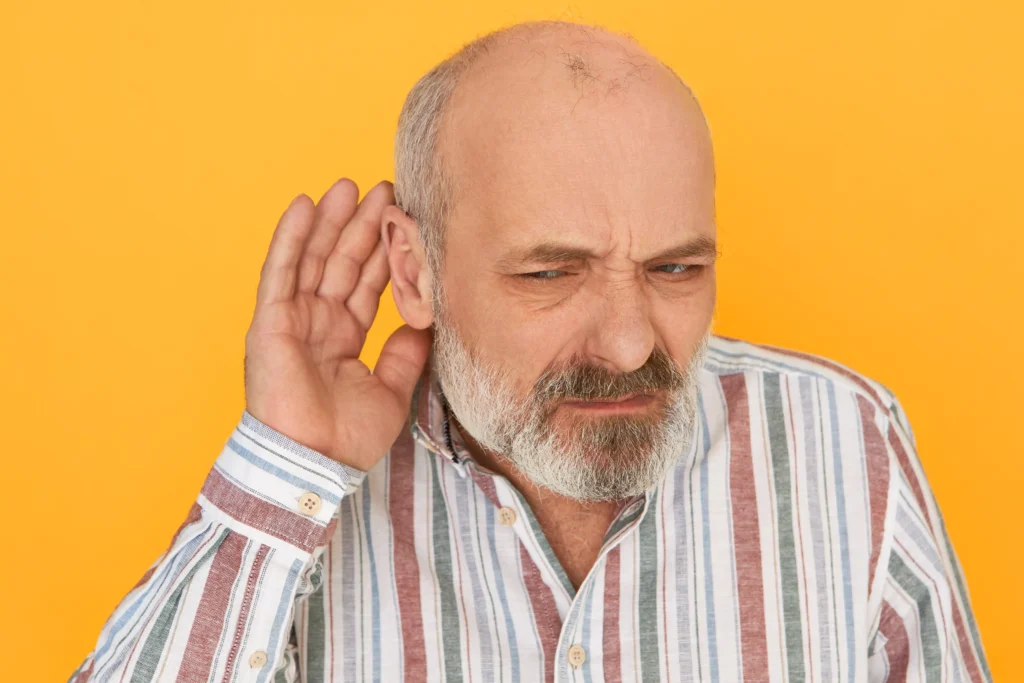
Yes. Earwax can cause a type of hearing loss called conductive hearing loss. This happens when a build-up of wax blocks the ear canal, stopping sound waves from reaching the eardrum properly.
It is usually temporary. So once the wax is removed, hearing typically returns to normal. The issue is not damage to the ear. It is simply a physical blockage.
How Earwax Causes Hearing Loss?
The ear canal is roughly 2.5 cm long. When wax accumulates and presses against the canal walls or the eardrum, it acts as a physical barrier. Sound waves cannot travel through it efficiently.
A partial blockage might cause muffled hearing or a slight drop in volume. The problem is restricted to the outer ear and can be managed with personalised treatment from skilled practitioners.
Conductive vs Sensorineural Hearing Loss
Conductive hearing loss means sound is being blocked before it reaches the inner ear. Earwax is a classic cause of this. It is the type of hearing loss most people experience at some point, and it is usually reversible.
Sensorineural hearing loss is different. It involves damage to the inner ear or the auditory nerve. This type is often permanent and is not caused by earwax.
If your hearing returns fully after wax removal, the cause was almost certainly conductive. If it does not, that warrants proper investigation with a GP or audiologist. Do not assume wax is the only explanation if something does not feel right.
Symptoms of Hearing Loss Caused by Earwax
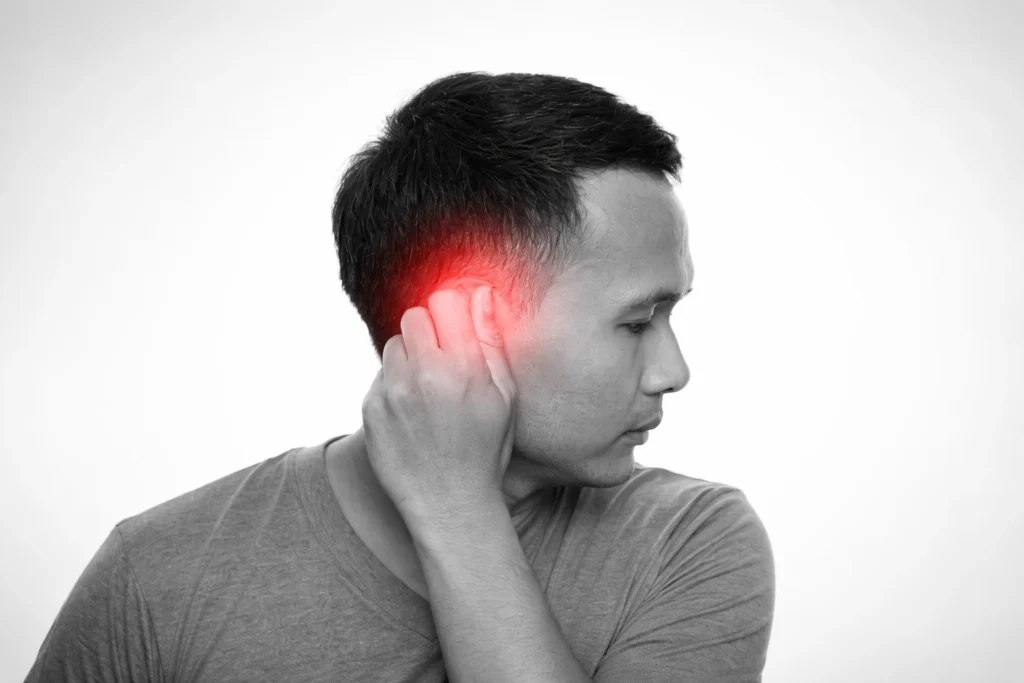
Earwax-related hearing loss tends to come on gradually. The symptoms are fairly consistent across patients:
Muffled or dull hearing in one or both ears is the most common complaint. You might also notice a feeling of fullness or pressure in the ear, a low ringing or buzzing (tinnitus), mild earache or discomfort, and occasionally dizziness. Itching inside the canal is also reported by some patients.
Symptoms often worsen after a shower or swim. Water causes wax to swell, which can tip a partial blockage into a full one quite quickly. While water can cause wax to expand, it’s important to distinguish this from Sudden Sensorineural Hearing Loss (SSHL).
If your hearing drops instantly and stays gone especially if it isn’t preceded by a shower it should be treated as a medical emergency (A&E or urgent GP appointment) to rule out inner ear issues, rather than assuming it is just wax.
Who Is Most at Risk of Earwax Buildup?
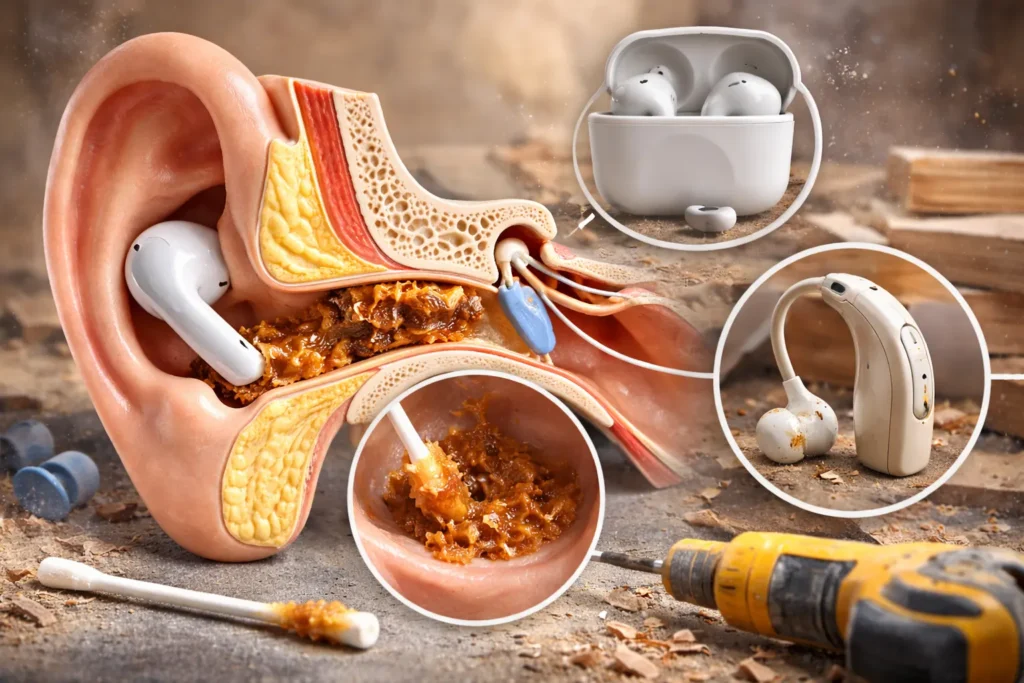
Not everyone produces the same amount of wax. Genetics play a role. But certain groups are at noticeably higher risk of impaction.
Hearing aid users are at the top of the list. The device sits inside the canal, which disrupts the ear’s natural self-cleaning movement and pushes wax inward. Older adults tend to produce drier, harder wax that moves more slowly.
Earbud and in-ear headphone users face a similar problem to hearing aid wearers. People with naturally narrow or hairy ear canals are more prone to blockages. So are those who use cotton buds regularly.
The ear is a self-cleaning organ; the ‘migratory skin’ inside the canal naturally moves wax outward. Using cotton buds doesn’t just push wax deeper; it can also strip away the protective oils in the ear canal, leaving you more prone to Otitis Externa (Outer Ear Infection).
How UK Patients Can Safely Remove Earwax?
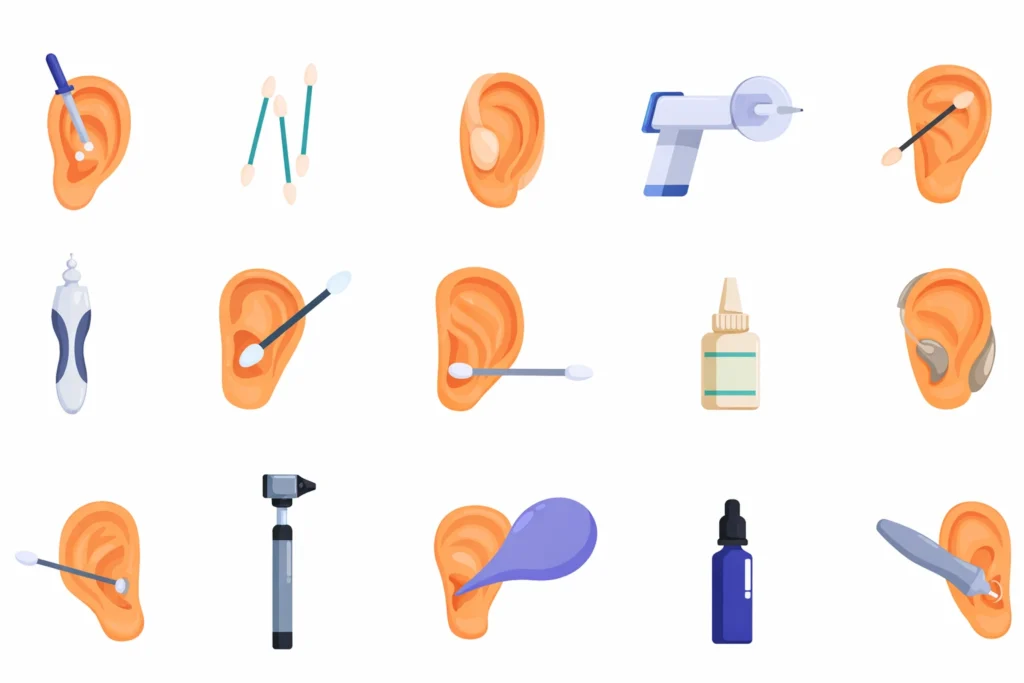
NHS Advice on Earwax Removal
The NHS recommends olive oil drops as a first-line option for softening earwax at home. You can use two to three drops, two to three times a day, for up to a week. Lie with the affected ear facing upward for a few minutes after applying. This softens the wax so the ear can expel it naturally.
The NHS advises strongly against using cotton buds, ear candles, or any object to dig wax out. These approaches can damage the ear canal or eardrum and are not supported by clinical evidence.
In recent years, NHS provision for earwax removal has changed significantly. Many Integrated Care Boards (ICBs) no longer fund earwax removal in GP surgeries. Most UK patients seek private professional services at a pharmacy or audiology clinic.
Professional Removal Options in the UK
If home treatment has not worked after a week or two, or if symptoms are significant, professional removal is the next step. Three methods are commonly available at UK pharmacies and private clinics.
Clinical studies show microsuction achieves successful earwax clearance in around 91% of cases, making it one of the most effective removal methods available. Microsuction is often the preferred method for those with a history of ear surgery or perforated eardrums, as it avoids the use of water and high pressure. However, patients should be aware it can be quite noisy, and a clinician will always assess your ear health before deciding if it is the right method for you.
Ear irrigation flushes the ear with warm water using a specialist device. It is effective for soft or oil-softened wax. It is important to distinguish modern Electronic Irrigation from old-fashioned ‘syringing.’
Syringing (manual pressure) is no longer used because it can damage the eardrum. Modern irrigation uses a controlled, low-pressure stream of water and is a much safer professional alternative.
Manual removal uses small instruments under direct view to remove wax by hand. This is typically carried out by a trained audiologist or ENT specialist.
All three methods are available privately in the UK, often through local pharmacies offering earwax removal services. Most appointments take between 15 and 30 minutes. Treatment is subject to clinical assessment and may not be suitable for all patients.
When to See an Expert in the UK
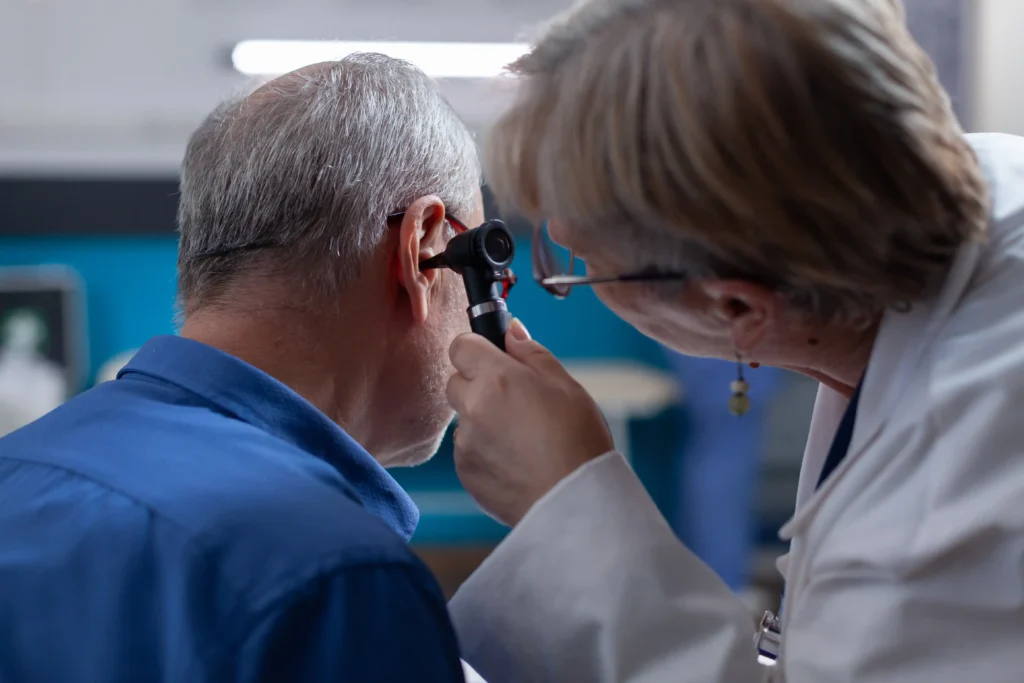
Most earwax cases can be managed without a GP appointment. But there are situations where you should seek medical advice before attempting any removal.
If you have ear pain that is getting worse, sudden or severe hearing loss in one ear, discharge or bleeding from the ear, a history of a perforated eardrum, or if you have had previous ear surgery then connect with your GP. These are not situations for self-treatment.
If hearing has not returned fully after professional wax removal, ask for a referral to an audiologist. Persistent hearing loss after clearance may indicate an underlying condition that needs proper assessment.
FAQs
Can earwax cause hearing loss in just one ear?
Yes. Wax tends to build up unevenly. It is entirely normal for one ear to be more blocked than the other. Hearing loss in a single ear that improves after wax removal is a classic presentation in practice.
Can cerumen cause permanent hearing loss?
Cerumen alone does not cause permanent hearing loss. The damage that occurs is conductive and reversible once the wax is removed. That said, repeatedly pushing wax deep into the canal using cotton buds can, over time, cause trauma to the ear canal or eardrum.
How long does earwax hearing loss last?
It depends on how the wax is treated. With olive oil drops at home, improvement can take one to two weeks. With professional microsuction or irrigation, hearing often improves immediately or within a day.
Is it normal for earwax to affect hearing after flying?
Yes. Changes in air pressure during a flight can cause existing wax to shift and temporarily worsen a blockage. If this happens often, it may be worth getting your ears checked before long-haul travel.
Can earwax cause tinnitus?
It can. Wax pressing against the eardrum may trigger a low ringing or buzzing sensation. In most cases, tinnitus linked to earwax resolves after removal. If tinnitus continues after the ear has been cleared, an audiologist should investigate further.
Should I use ear candles to remove wax at home?
No. There is no clinical evidence that ear candles work. There is evidence they can cause burns, ear canal blockages from melted wax, and perforated eardrums. Avoid them entirely.
How often should I have my ears checked for wax?
There is no single answer. If you use hearing aids, wear in-ear earphones regularly, or have a history of impaction, a check every six to twelve months is sensible. Otherwise, only seek removal when you have symptoms.
Conclusion
Earwax can absolutely cause hearing loss, but it is not the kind you need to worry about long-term. It is conductive, temporary, and treatable. Whether you use olive oil drops at home or visit a pharmacy for microsuction, the fix is usually straightforward.
If your hearing has dropped and you suspect wax, do not ignore it and do not reach for a cotton bud. Seek proper advice or book a professional removal.
Our earwax removal service is available at Orrell Park Pharmacy. You can book directly online or call us to speak with a member of our team. We use microsuction, carried out by trained professionals, in a clean and clinical setting.