
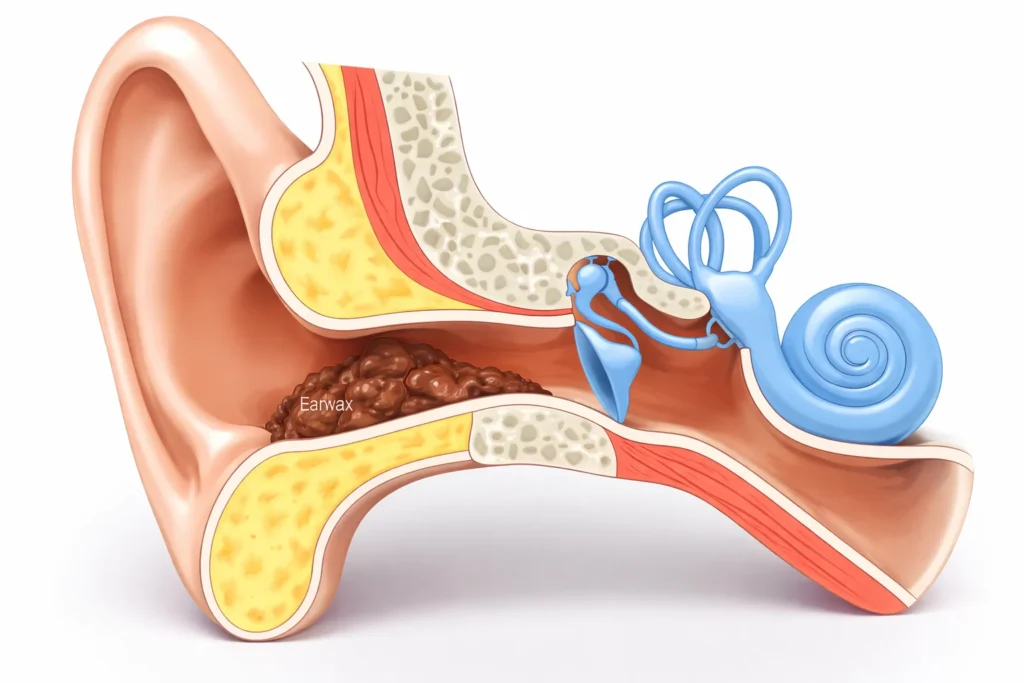
Excessive earwax is usually caused by overactive ceruminous glands, narrow or irregularly shaped ear canals, or regular use of earbuds and hearing aids. Genetics, age, and certain skin conditions can also push production into overdrive.
Sometimes it is not overproduction at all but a problem with how the wax migrates outward. When buildup becomes a blockage, it causes muffled hearing, fullness, tinnitus, and occasionally pain.
What Is Considered Excessive Earwax?
A small amount of wax in the ear canal is normal. It is called cerumen, and it protects the skin lining your ear from water, bacteria, and debris.
Excessive earwax means the wax is building up faster than the ear can move it out. This leads to impaction, where a plug of wax presses against the eardrum or fills the canal.
Signs that your earwax has crossed from normal to problematic include a blocked or full feeling in the ear, reduced hearing on one or both sides, tinnitus (ringing or buzzing), itching, and sometimes a dull ache.
If you are noticing these symptoms repeatedly, the volume your body is producing is likely more than it should be.
Note: In recent years, NHS provision for earwax removal has been significantly restricted. Many GP surgeries across the UK no longer offer this service routinely. As a result, most patients are now directed to private professional services at local pharmacies or audiology clinics for safe and timely removal.
Common Causes of Excessive Earwax
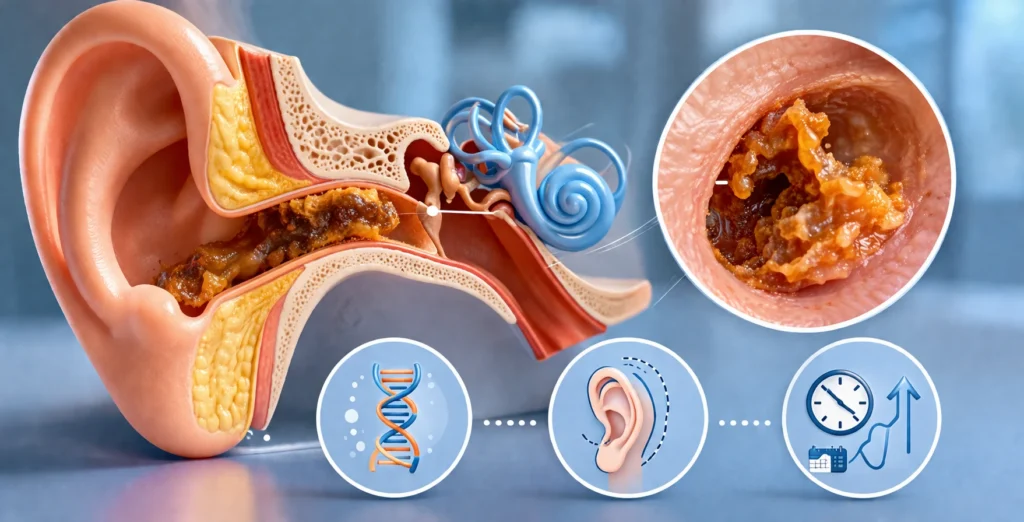
Genetics and Gland Activity
Some people simply produce more wax than others. Ceruminous glands sit in the outer third of the ear canal, and their output varies between individuals. If one or both parents had regular earwax problems, there is a reasonable chance you will too.
The type of wax also differs by genetics. People of East Asian descent tend to produce dry, flaky wax. People of African and European descent typically produce wet, sticky wax. Sticky wax is harder to migrate naturally and more likely to cause blockages.
Narrow or Irregular Ear Canals
The shape of your ear canal affects how well wax drains. A narrow, curved, or hairy canal physically slows the outward movement of wax. People with naturally narrow canals often experience recurring blockages with no other explanation.
This is particularly relevant in children. Their canals are smaller and at a different angle, which is one reason excessive earwax in kids is reported more often than many parents expect.
Ageing
As you get older, earwax changes texture. It becomes drier and less mobile. The tiny hair-like structures inside the ear canal that assist with wax migration also work less efficiently with age.
Older adults are significantly more likely to develop impacted earwax. It is one of the most common causes of hearing loss in people over 65, and it is often overlooked simply because age-related hearing changes are assumed to be the cause.
Lifestyle Factors That Increase Earwax
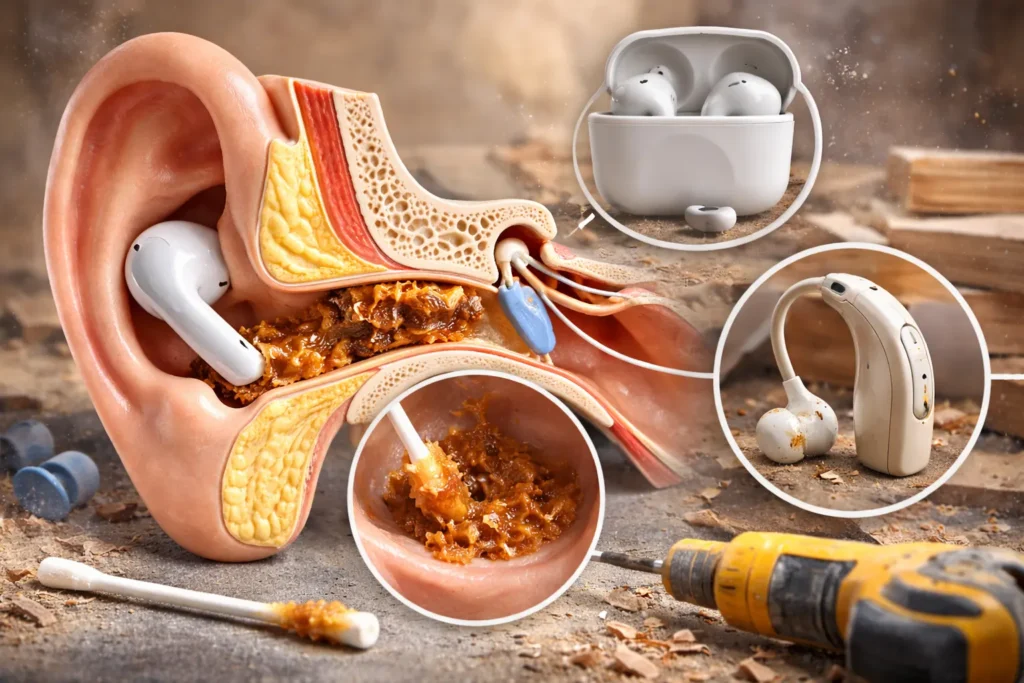
Earbuds, Hearing Aids, and Earplugs
Anything inserted into the ear canal blocks natural wax migration. Earbuds are one of the most common lifestyle triggers for excessive earwax. They push wax inward rather than letting it travel out.
Hearing aid users face the same issue. The ear canal uses a process called epithelial migration, where skin grows from the centre of the eardrum outwards. Thus acting like a natural conveyor belt to carry wax away.
Hearing aids, earplugs, and earbuds act as a physical dam, blocking this migration and causing wax to become trapped and compacted. Regular earwax removal becomes a routine part of hearing aid maintenance for many users.
Cotton Buds
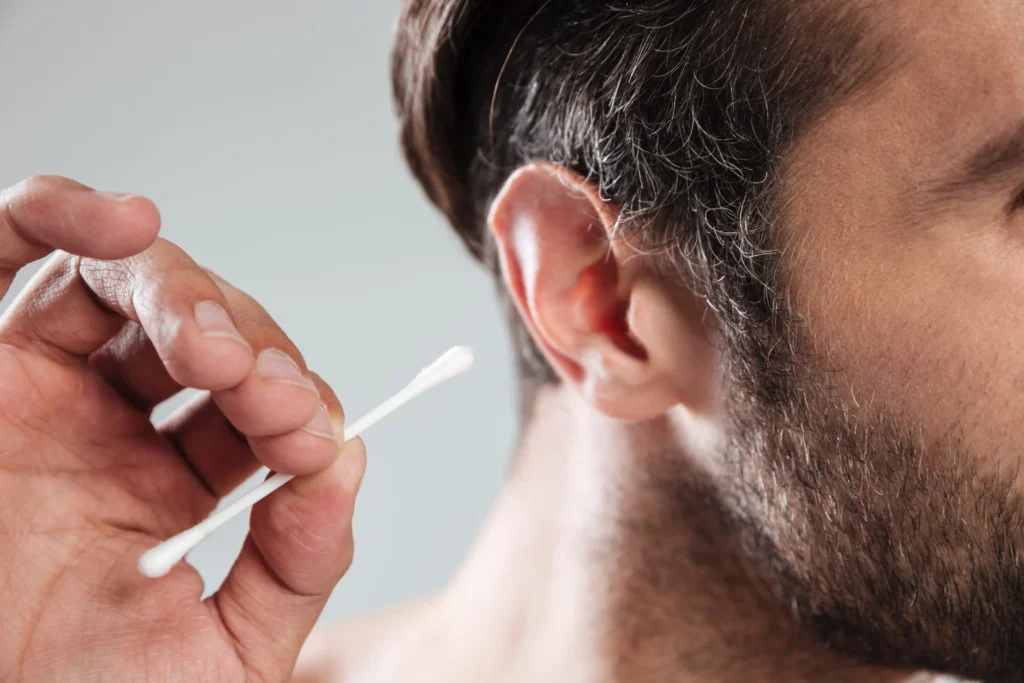
This is worth stating clearly: cotton buds do not clean ears. They push wax deeper into the canal and compress it against the eardrum. Many cases of impaction are caused or worsened by regular cotton bud use.
Dusty or Dry Environments
Working in dusty environments can stimulate extra wax production. The ear responds to airborne particles by producing more cerumen as a defence. This is common in construction, woodworking, and agricultural settings.
Medical Conditions Linked to Excess Earwax

Skin Conditions
Eczema, psoriasis, and seborrhoeic dermatitis can all affect the skin inside the ear canal. Flaking skin mixes with cerumen and creates a thicker, harder plug that does not migrate normally. People with these conditions often report persistent earwax problems alongside their skin symptoms.
Bony Growths (Exostoses)
Surfer’s ear is a real condition. Repeated cold water exposure causes bony growths to develop inside the ear canal, narrowing it significantly. This makes wax removal difficult and blockages more likely.
Autoimmune and Inflammatory Conditions
Conditions like lupus and Sjögren’s syndrome can alter secretion patterns throughout the body, including in the ears. Some people with these conditions report changes in earwax production as part of their broader symptom picture.
What Deficiency Causes Excessive Earwax?
This is a question that comes up frequently. The honest answer is that no vitamin or mineral deficiency has been definitively proven to cause excessive earwax.
Some online sources point to omega-3 or zinc, but clinical evidence does not support a direct link. If you are concerned about deficiencies, a blood test is the right route.
Risks of Untreated Earwax Buildup
Ignoring an impacted ear is rarely harmless in the long run. The most immediate risk is conductive hearing loss, where sound cannot pass through the canal properly. In most cases, this reverses once the wax is removed.
Prolonged blockages can also cause tinnitus, a low-grade ache, and increased risk of ear infections. Trapped wax creates a warm, moist environment that bacteria find welcoming.
In older adults, untreated earwax impaction has been linked to cognitive difficulties and communication problems. This is not because of any direct effect on the brain.
It is largely because the hearing loss that comes with blockage makes conversation and engagement harder.
When to Seek Medical Help?
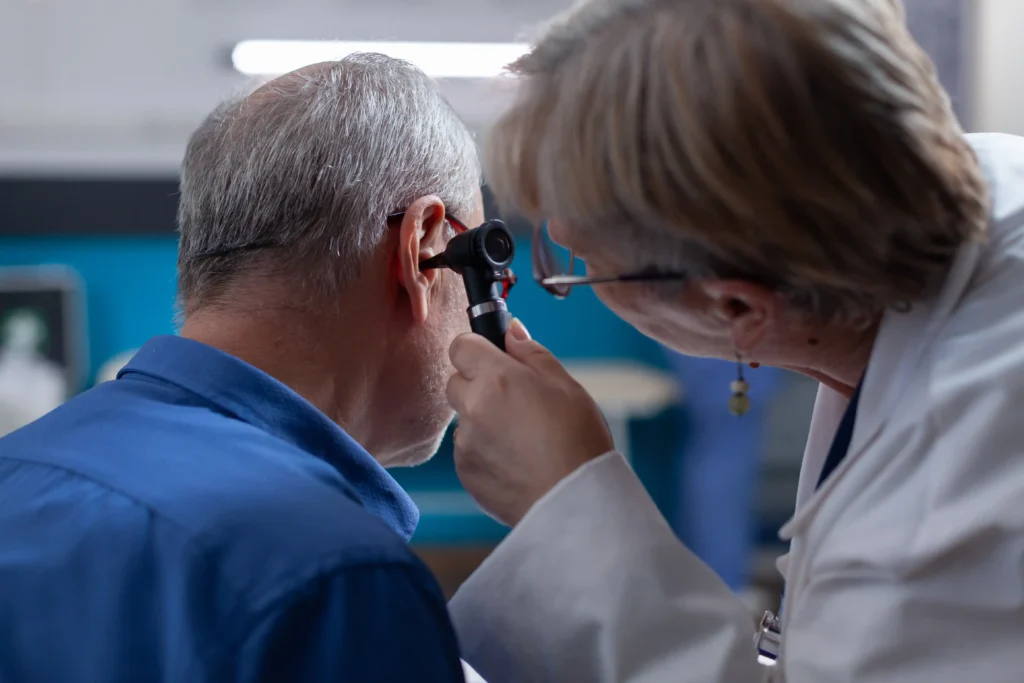
See a healthcare professional if you have a blocked sensation lasting more than a week, sudden or significant hearing loss, discharge from the ear, pain, dizziness, or if you have a history of ear problems, perforated eardrum, or ear surgery.
Do not attempt to remove wax with cotton buds, candles, or any object inserted into the canal. These methods carry real risks of damage.
Earwax removal carried out by a trained professional is safe, fast, and highly effective. The most common methods are microsuction, irrigation, and manual removal with a probe.
Microsuction is widely regarded as the safest option, particularly for people with a history of ear problems.
Frequently Asked Questions
What condition causes excessive earwax in adults?
Narrow ear canals, skin conditions like eczema, and chronic use of in-ear devices are the most common underlying causes in adults. Bony growths from cold water exposure (exostoses) can also be a factor.
Why does my child produce so much earwax?
Children have smaller, narrower ear canals that sit at a different angle to adults. This makes natural wax migration less efficient. Excessive earwax in children is often not a sign of any health problem. It simply means their canal shape makes clearance harder. That said, if your child is complaining of blocked ears or seems to have trouble hearing, getting it checked is the right move.
Can stress cause more earwax?
There is a plausible link. Stress activates the body’s autonomic nervous system, which can influence secretion from various glands, including ceruminous glands. Some people report increased wax production during stressful periods. The research is limited, but it is not an unreasonable connection.
Is excessive earwax a symptom of something more serious?
In most cases, no. It is usually anatomical or lifestyle-related. Occasionally it can point to a skin condition affecting the ear canal. Very rarely, it may be associated with systemic conditions. If you are experiencing other unexplained symptoms alongside recurring earwax buildup.
Can diet affect earwax production?
Some practitioners suggest that dairy-heavy diets increase earwax production in susceptible individuals, though solid clinical evidence is thin. Staying well hydrated generally supports healthy skin function, which may indirectly influence wax texture. It is unlikely that diet alone is the primary driver for most people.
Why does one ear produce more wax than the other?
Ear canal shape and gland distribution can differ between your two ears. The side you sleep on may also play a role, as pressure and heat can affect wax consistency. If one ear is consistently more problematic, it is worth mentioning to a professional during removal as it may indicate an anatomical reason worth knowing about.
Does showering or swimming make earwax worse?
Water that enters the canal can soften wax and temporarily worsen a blockage. Regular swimmers, particularly in cold water, are at higher risk of both exostoses and impaction. Wearing well-fitted ear plugs while swimming reduces this risk considerably.
Conclusion
Excessive earwax is rarely a sign of poor hygiene or a serious illness. For most people, it comes down to genetics, canal shape, age, or habits like regular earbud use. Knowing your personal triggers makes it easier to manage. If you are prone to buildup, professional earwax removal every few months should be a sensible routine.
Do not wait until your hearing is significantly affected. Early removal is quicker, and less uncomfortable.
If you are experiencing blocked ears, muffled hearing, or recurring earwax problems, our earwax removal service is here to help. We offer safe, professional microsuction and irrigation carried out by trained clinicians. Book your appointment today and hear clearly again.